

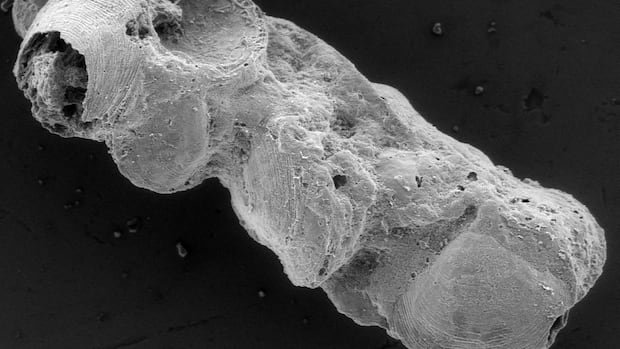

Long before the era of dinosaurs, a surge in biodiversity led to the emergence of early versions of modern animals, accompanied by an increase in fecal matter. A recent study sheds light on how the examination of coprolites, or fossilized excrement, aids in comprehending the ancient ecosystems of Earth and their relevance to current nutrient cycles and animal interactions.
Published in the journal Trends in Evolution & Ecology, the research delved into the analysis of fecal fossils dating back to the Cambrian period, approximately 540 million years ago. By studying fecal remains from primitive worms, invertebrates, and mollusk-like creatures, scientists deduced that excrement played a vital role in enhancing the habitability of deep-water ecosystems and increasing nutrient availability during that era, which predates the age of dinosaurs by about 300 million years.
The discovery that fecal matter was abundant during the Cambrian period holds significance for understanding the origins of present-day marine ecosystems. Julien Kimmig, one of the paper’s co-authors and head of the paleontology division at the Karlsruhe Natural History Museum in Germany, emphasized the critical role of feces in sustaining both ancient and modern marine ecosystems, underscoring the importance of exploring the driving forces behind ecosystem dynamics and evolution.
Analyzing coprolite records from various global deposits, Kimmig and co-author Russell Bicknell examined hundreds of fecal fossils spanning different species, including burrowing worms, arthropods, brachiopods, and hyoliths. The size of the earliest fecal fossils was microscopic, evolving over 15 million years into the Cambrian period to resemble rabbit droppings. Subsequently, these coprolites became visible to the naked eye and contained remnants of shells or worms.
Beyond shedding light on evolutionary processes and predator-prey relationships, studying coprolites aids in unraveling Earth’s ecological intricacies and the transformative impact of the Cambrian Radiation on ecosystems. This rapid appearance of modern animal groups, also known as the Cambrian Explosion, triggered significant changes, making it crucial to comprehend the ecological adaptations of ancient life forms in response to environmental shifts.
The study underscores the pivotal role of coprolites in enriching our understanding of prehistoric environments and elucidating the intricate web of interactions among organisms. By examining waste products, nutrient cycles, and energy fluxes, researchers can gain insights into the mechanisms driving biological diversity and ecosystem dynamics, transcending the boundaries of animal-centric studies to embrace a holistic view encompassing geological time scales.
Karen Chin, a paleontologist at the University of Colorado Museum of Natural History, highlights the underappreciated value of coprolites in paleontological research. She emphasizes the unique insights provided by fecal fossils into ancient ecosystems, such as identifying dietary preferences and deciphering carbon cycles, thereby offering a comprehensive understanding of past life forms and their ecological roles.
In essence, coprolites serve as invaluable windows into the past, offering a glimpse into the intricate ecological tapestry that shaped ancient life forms and paved the way for the diverse ecosystems we observe today. Through continued research and exploration of these often-overlooked fossils, scientists aim to unravel the mysteries of bygone eras and glean valuable lessons for interpreting and predicting the future of our changing planet.