

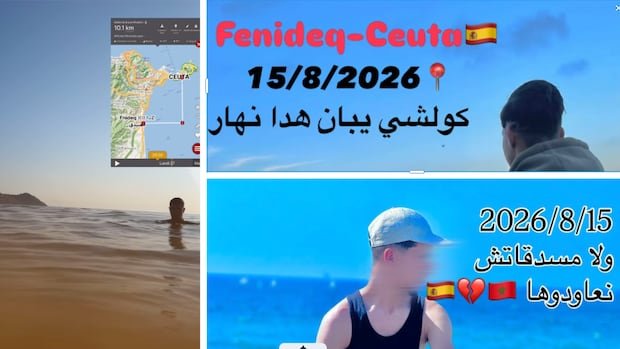

In the lead-up to the recent significant influx of migrants to Europe, a brief video shared on Instagram garnered 1.4 million views. The video depicted a young man partially submerged in water, with a map illustrating a sea route from Fnideq, Morocco, to Ceuta, a Spanish enclave in North Africa. The post hinted at a successful arrival in Ceuta.
Various viral posts on platforms like Instagram and TikTok seemed to have influenced two waves of irregular migration from Morocco to Ceuta. These posts, part of online communities focused on migration-related culture, utilized music, memes, and imagery to attract predominantly African and Middle Eastern youth seeking better opportunities abroad.
Debate exists among governments and organizations regarding whether a single entity orchestrated the events in Ceuta or if migration was exploited for geopolitical purposes. Nevertheless, misinformation spread by multiple online communities played a significant role in driving the migration waves during the summer.
A visual investigations team, with support from Sebastian Vandermeersch of Bellingcat, identified numerous social media accounts, particularly on Instagram, active before the initial wave on July 30. Misinformation suggesting that Spain would no longer reject migrants arriving by sea following a court ruling sparked a surge in posts, leading to over 72,000 individuals crossing into Ceuta.
Though most individuals from the July 30 crossing have returned to Morocco, approximately 5,000 remain in Ceuta, with some residing on a beach supported by charities. Tragically, nearly 100 people lost their lives attempting the crossing.
The online surge was fueled by the fact that prior to the court ruling, an increasing number of migrants had successfully reached Ceuta. The Mixed Migration Centre reported that Ceuta had become the primary entry point into Spain in the first quarter of the year, with stricter controls on other migration routes potentially contributing to this trend.
While social media played a role in shaping misinformation, the desire to migrate was already present among many individuals. The surge of migration-related content resonated with disillusioned and desperate youth in North Africa and beyond, amplifying aspirations for migration.
As Moroccan and Spanish authorities prepared for another wave of migration on August 15, significant police presence and arrests were reported. The circulation of social media content encouraging the crossings prompted action by the government to combat such activities.
The ongoing dissemination of migration-related messages on social media underscores the deep-seated desperation experienced by many individuals. Influencer-style accounts promoting migration themes have attracted thousands of followers, highlighting the allure of migration and the search for better opportunities abroad.