

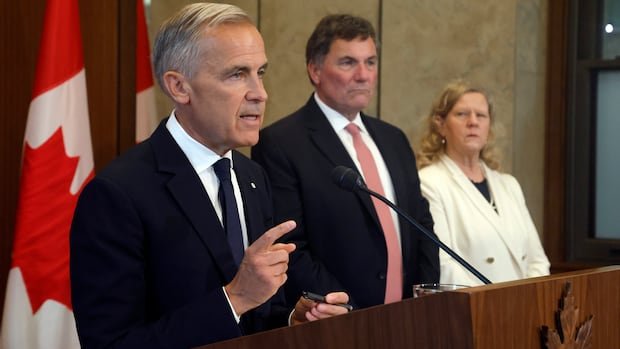

After enduring a week of orchestrated turmoil and unnecessary tension, Prime Minister Mark Carney stepped forward on Saturday morning to elucidate the reasons behind rejecting what he referred to as a “poor deal” and to shed light on the next steps in the process.
“Canada has been engaged in extensive and sincere negotiations with the United States for over a year to craft a new, all-encompassing trade agreement,” Carney stated. “Throughout this process, we have demonstrated pragmatism, patience, and unwavering persistence.”
However, despite Canada’s efforts, Carney expressed dissatisfaction with the sudden alterations proposed by American negotiators, labeling them as “unfair, economically unsound, and casting doubt on the credibility of any potential agreement.” This sentiment was echoed by U.S. Trade Representative Jamieson Greer, who informed the press in a late-night conference call that Canada had opted not to finalize the deal.
In the aftermath of these events, concerns were raised by experts such as Steve Verheul and Chrystia Freeland, who expressed worries about the concessions made by Canada and the potential repercussions of accepting U.S. tariffs. The imposition of new tariffs by President Donald Trump is anticipated to have adverse effects, with economist Trevor Tombe estimating that up to 90,000 jobs in Canada could be at risk.
Amidst the uncertainty, the future of the relationship between Canada and the U.S. remains uncertain. The evolving dynamics in international trade, characterized by protectionism and power play, suggest a challenging road ahead. The recent breakdown in negotiations has left both Canadian and American officials in a precarious position, with potentially unfavorable outcomes looming.
As both countries navigate this complex scenario, the necessity for a reevaluation of their relationship becomes apparent. Carney emphasized the need for a fair and reliable economic partnership, acknowledging the changing landscape of American foreign policy. Moving forward, it will be crucial for both sides to reassess their strategies and objectives to chart a path towards constructive engagement.
In this shifting paradigm of international relations, where alliances are being redefined and trade dynamics are evolving, the way forward for Canada and the U.S. remains uncertain. The repercussions of failed negotiations and the imposition of tariffs underline the importance of strategic decision-making and diplomatic engagement in the face of challenging circumstances.