

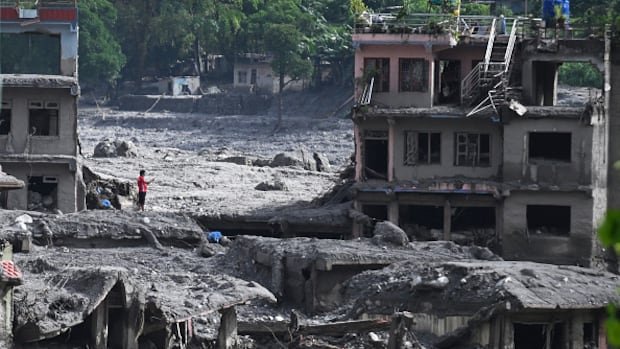

Rescue teams, aided by search dogs, are continuing their efforts to locate thousands of individuals still unaccounted for after devastating floods ravaged communities along the Nepal-China border. The catastrophic event, which occurred on August 26, has resulted in over 1,000 confirmed deaths in Nepal and 16 in China, with thousands still missing in both countries.
The extensive damage caused by the disaster, including landslides and destroyed infrastructure, has made rescue operations challenging. Search crews are navigating treacherous terrain and heaps of debris, with fears mounting that the death toll may increase as more isolated areas are accessed.
In Nepal, particular focus is on rescuing around 900 workers, with approximately 500 believed to be trapped in tunnels at hydroelectric projects impacted by the floods. Foreign experts have been assisting local teams in these challenging rescue missions, as shown in images released by the Nepalese army.
Meanwhile, in China, rescue teams are concentrating their efforts on areas hit by mudslides, especially near the Gyirong Port border crossing, which suffered significant destruction. Authorities are working tirelessly to clear blocked highways and provide essential aid to affected regions.
Efforts to reach stranded communities have resulted in the rescue of over 11,800 individuals so far, with emergency crews utilizing helicopters and aircraft in areas where conventional transportation routes have been severed. The international response to the disaster includes Canada sending $5 million in emergency aid to Nepal, with additional support for reconstruction on the horizon.
The catastrophe, triggered by a glacial collapse in the Himalayas, has underscored the urgent need for climate action, as stated by Nepal’s Prime Minister Balendra Shah. The incident has prompted calls for heightened awareness of climate change-related risks in the region and greater international cooperation to address such disasters effectively.