

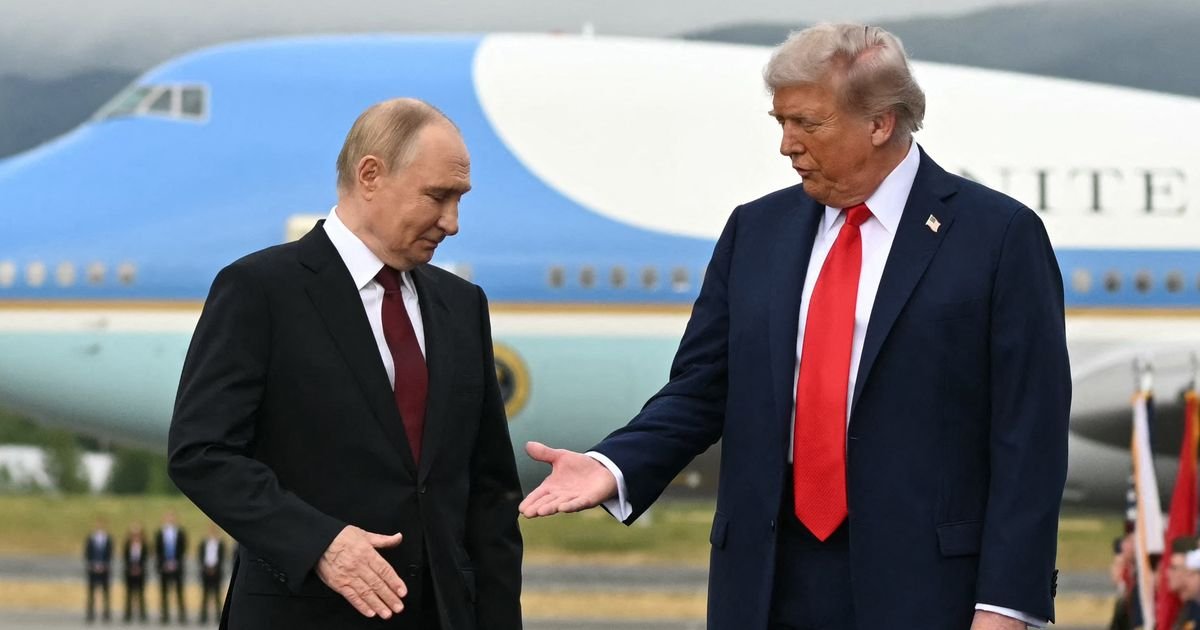

Vladimir Putin’s recent dismissal of Donald Trump’s proposed peace plan and his amplification of his military’s capabilities are seen as a strategic move to influence Washington DC and nudge Trump towards accepting Russia’s terms. The US President faced embarrassment on the global stage as Putin bluntly rejected Trump’s 28-point plan, which critics argue heavily favored Russia by requiring Ukraine to hand over Crimea, Luhansk, and Donetsk to Russia, engage in economic talks with Moscow, and provide limited assurances to Kyiv.
However, Putin is not content with Trump’s initial proposal and aims to sway the President into supporting more of Russia’s demands. Putin’s strategy includes absorbing eastern Ukraine into Russia and preventing Ukraine from joining NATO. This calculated approach is designed to sway US decision-making in favor of Russia and align with Moscow’s objectives, as per Karan Vassil, an intelligence analyst at Sibylline.
According to Vassil, the Kremlin is likely to continue magnifying its military achievements to influence US policy decisions and push Trump towards accepting peace terms that serve Russia’s interests. Moscow remains confident in its approach, anticipating significant progress by 2026 and expecting diminished Western support for Ukraine. Putin’s recent warnings of potential conflicts with European nations are viewed as a tactic to sow discord within the EU and deter further backing for Ukraine.
Putin has seemingly captivated Trump’s envoy, Steve Witkoff, leading American officials to pursue more of Russia’s interests in the hopes of securing lasting peace. Despite public statements, Putin’s stance on Ukraine’s independence remains ambiguous, allowing pro-Russian propaganda to promote imperialistic ideals and dominance over Eastern Europe.
Maxim Alyukov, a political sociologist and Russia expert, highlighted that Russia’s economy enables it to disregard peace calls and avoid compromising. However, signs of economic strain are emerging, possibly pressuring Putin to make bold claims of strength. Economic pressures, volatile oil and gas revenues, and a growing budget deficit may hinder Russia’s ability to sustain a prolonged conflict with Europe on multiple fronts, both financially and militarily.
While discussions of broader conflicts serve to demonstrate resolve and deter Western support for Ukraine, the feasibility of a direct confrontation with NATO by Russia remains uncertain. Despite this, the Kremlin’s decision-making process remains opaque, leaving uncertainties about Russia’s true capabilities and intentions in the ongoing geopolitical landscape.