

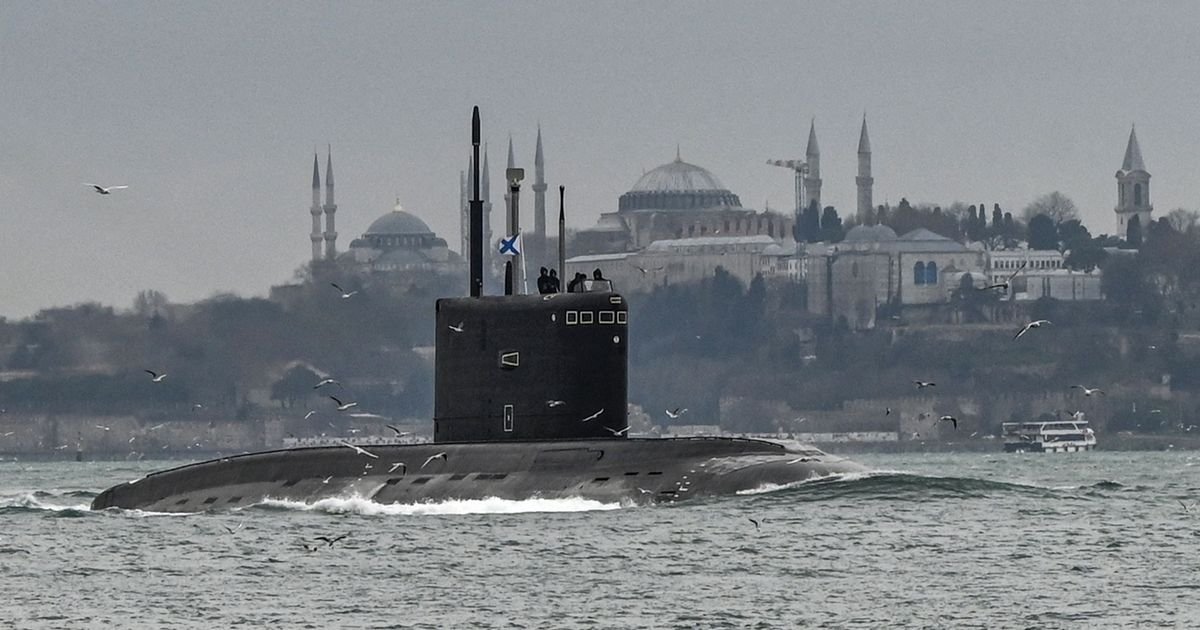

Ensuring the security of the northern borders has become increasingly vital for the UK due to the rising threat posed by Russia. There have been reports of Kremlin submarines making more frequent covert visits to the region, potentially to gather intelligence on UK sites and underwater cabling.
These submarines have been spotted off the coast more frequently in recent times, possibly to test detection capabilities and gauge the UK’s response. The concern is heightened because Europe and the UK heavily rely on undersea cables connecting them to North America, facilitating millions of financial transactions and secure communications.
In the event of a conflict, the destruction of these cables or potential sabotage by Russia’s Naval Spetsnaz commandos could have severe consequences. There are also suspicions that Russia has developed devastating doomsday bombs capable of generating tsunami-like waves through underwater explosions.
Russia’s covert submarine operations and specialized naval units, such as the Spetsnaz, remain shrouded in secrecy, adding to the concerns about security in the North Atlantic region. With climate change opening up new maritime routes, access to the North Atlantic is becoming increasingly important for trade and military operations.
The UK’s partnership with Norway, a NATO member with close military ties, plays a crucial role in safeguarding these strategic interests. British Type-26 frigates are equipped to detect and counter Russia’s underwater threats, showcasing the UK’s commitment to security in the region.