

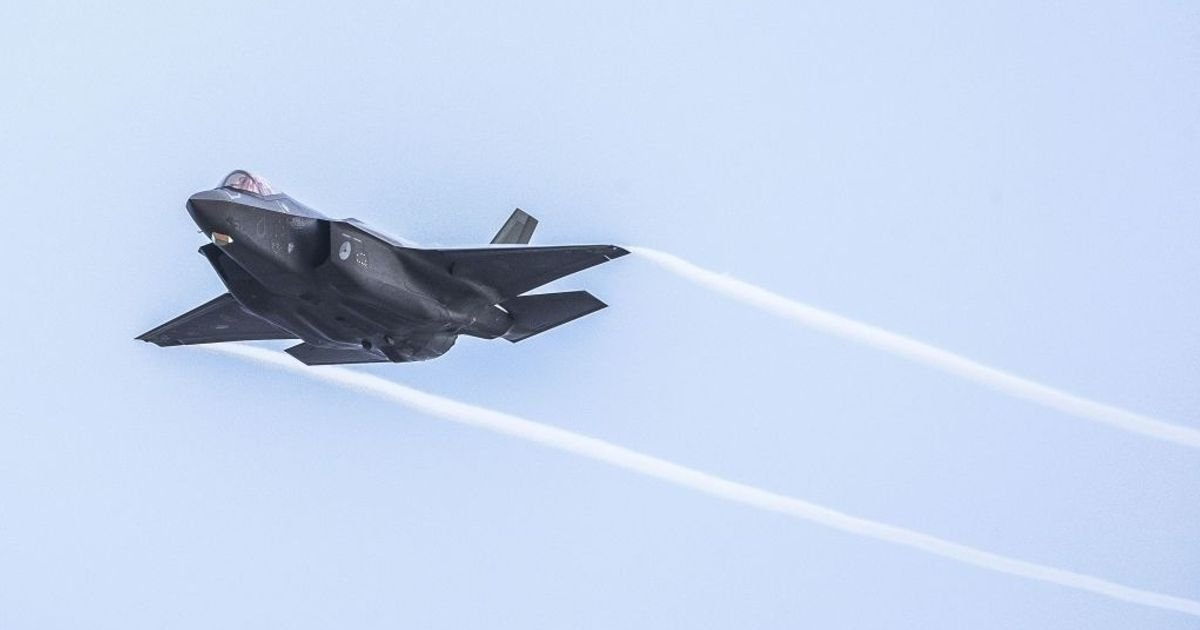

Two military jets were dispatched from a NATO member country’s airbase in response to an unidentified aircraft breaching the alliance’s airspace. The Royal Netherlands Air Force fighters took off from the Volkel military base after the Ministry of Defense activated the Quick Reaction Alert due to the aircraft failing to identify itself upon entry.
Quick Reaction Alerts are conducted multiple times annually, with alternating responsibilities between Belgium and covering the entire Benelux region, as per a Ministry of Defense spokesperson. The reason for the aircraft’s presence in Dutch airspace remains unclear, as reported by the Express.
A Ministry of Defense representative suggested that the unidentified aircraft might have been a drone of advanced nature, ruling out commercial variants. Alternatively, it could have been a passenger aircraft experiencing temporary communication loss or another unmanned vehicle.
This incident follows NATO fighter jets being scrambled the previous day in response to a severe missile attack during the ongoing Ukraine conflict involving Russian forces. Ukraine faced disruptions in electricity and heating services, with Russia launching 51 missiles and 653 strike drones on civilian infrastructure as temperatures plummeted. The attack included a direct hit on a major thermal power plant in Kryvyi Rih, the birthplace of Volodymr Zelensky.
Ukrainian air defenses successfully intercepted 585 drones, 29 cruise missiles, and one ballistic missile, countering the extensive aerial assault by Russian Tu-95MS and Tu-160MS strategic bomber aircraft. Concerns over potential threats to alliance territories prompted Poland to mobilize warplanes in response to the ballistic and cruise missile activity.
In a statement, the Polish Armed Forces Operational Command confirmed the activation of necessary forces and resources in response to Russian airstrikes in Ukrainian territory. Precautionary measures, including the scrambling of fighter aircraft and readiness of air defense systems, were implemented to secure airspace, particularly in proximity to vulnerable areas.