

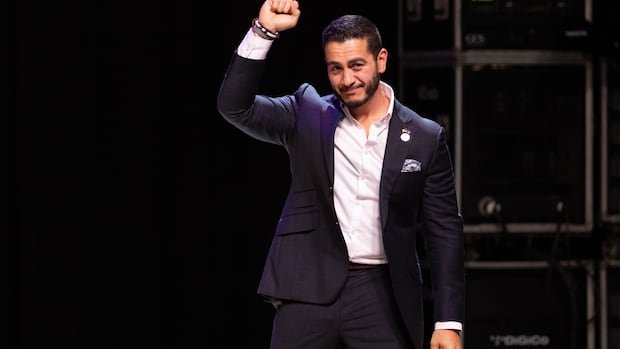

Abdul El-Sayed’s triumph in Michigan’s Democratic Senate primary is being hailed as a significant victory for the party’s progressive faction. In this crucial swing state, the former public health official clinched a closely contested race with a smaller campaign budget compared to Haley Stevens, a moderate contender, who enjoyed backing of over $60 million US.
El-Sayed’s success aligns with a broader trend of wins in primary contests for Democratic socialist and leftist candidates. Just recently, Peggy Flanagan, a progressive, emerged victorious in Minnesota’s Democratic Senate primary.
While left-leaning candidates secure nominations, some analysts remain skeptical about their potential success in the upcoming midterm elections. This raises questions about the Democratic Party’s trajectory and potential presidential candidates for 2028.
In a recent discussion, Washington correspondent Katie Simpson, along with “Front Burner” host Jayme Poisson and Bloomberg senior White House reporter Josh Wingrove, delved into these topics. They highlighted various viewpoints on the party’s strategic direction and the evolving landscape of progressive politics.
Discussing the Democratic Party’s current state, Fareed Zakaria emphasized the need for a shift towards the center on cultural and social issues, suggesting that merely moving left on economic matters may not be sufficient. This viewpoint contrasts with the sentiments within the progressive wing, who argue that a more dynamic approach is necessary to resonate with voters.
Analyzing recent electoral patterns, Josh Wingrove drew parallels between past and present dynamics within the party, pointing out similarities in voting trends. The emergence of influential figures like Alexandria Ocasio-Cortez signifies a growing influence of the progressive movement, raising speculation about potential candidates for future elections.
As the Democrats navigate through a phase of rebranding and introspection, the need for innovative campaigns and visionary leadership becomes increasingly apparent. The party’s ability to address public frustrations and present compelling ideas will be crucial in shaping its future direction.
Amidst this political evolution, the Democratic Party is poised for potential generational changes, as evidenced by the emergence of a new wave of younger candidates in states like Michigan. The upcoming years are likely to witness a transformative shift within the party, reflecting the changing landscape of American politics.