

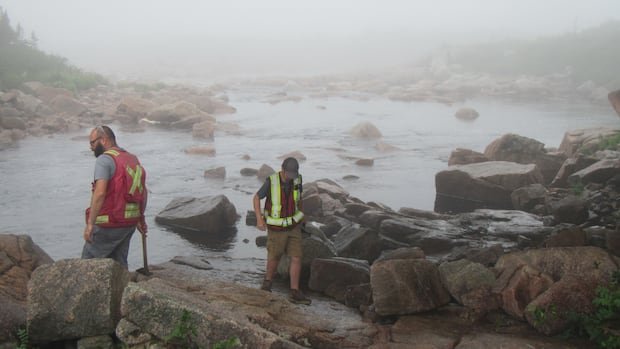

Severe wildfire seasons in Newfoundland and Labrador are posing safety risks to the public and impacting routine activities in rural and remote regions, including crucial geoscience work vital for the mining sector. The wildfires can render work areas inaccessible for safety reasons and lead to the reassignment of aircraft meant for transporting scientists to assist in wildfire response efforts.
This situation has added complexity to the planning and scheduling responsibilities of scientific program directors, but according to the responsible minister, the work is still progressing. Notably, the Government of Newfoundland and Labrador underspent by $321,800 on transportation for geophysical survey work for the Geological Survey of Newfoundland and Labrador compared to the budgeted amount last year.
Energy and Mines Minister Lloyd Parrott attributed the lower spending to reduced helicopter usage due to unavailability caused by wildfires. While scientists occasionally utilize drones for field programs, helicopters remain indispensable, especially in Labrador. Disruptions in helicopter travel can occur due to adverse weather conditions and wildfires.
Despite the challenges posed by wildfires, Minister Parrott confirmed that the survey work is moving forward. Recent projects, some in collaboration with the federal government, have focused on data collection for potential rare earth elements in southeastern Labrador and a geophysical survey in the White Bay area.
The Geological Survey of Newfoundland and Labrador is currently conducting 10 active field projects, with a majority in Newfoundland and the rest in Labrador. Additionally, there are two planned airborne surveys using fixed-wing aircraft as part of the scientific program. The results of the fieldwork, including sample analysis and data processing, are made publicly accessible through peer-reviewed scientific reports.
Industry experts emphasize the value of public geoscience in driving investment, de-risking projects, informing land use decisions, and accelerating discoveries. The province has witnessed a surge in private spending on exploration work, with the forecast for this year reaching $283.3 million compared to just under $249 million in 2025.
Mining Industry N.L. executive director Amanda McCallum highlighted the sector’s resilience in managing through wildfire disruptions, noting that projects are adjusting schedules rather than halting entirely. The mining industry is a significant contributor to Newfoundland and Labrador’s GDP, with 11 active mines employing an estimated 8,920 individuals as of 2025.
Despite a lower number of fires in 2026 compared to the previous year, the total burned area has been larger. As of the latest update, the wildfire risk level across reported areas in Newfoundland and Labrador remains low, with four active fires in central and northern Labrador.