

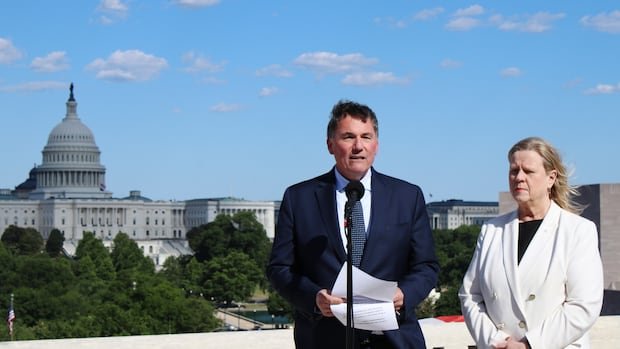

Canada’s Trade Minister, Dominic LeBlanc, along with his American counterpart, are working on a joint proposal to potentially secure a trade deal with U.S. President Donald Trump before the upcoming tariff deadline. The aim is to present the proposal to Trump at least a day before the deadline to allow him sufficient time to make a final decision. The proposal is intended to prevent new 50% tariffs on numerous Canadian imports scheduled to take effect on August 19.
LeBlanc recently met with U.S. Trade Representative Jamieson Greer in Washington for the third time in three weeks. Following the meeting, neither LeBlanc nor Canada’s chief trade negotiator, Janice Charette, provided comments to reporters. LeBlanc mentioned on X that discussions are ongoing, and both he and Charette will continue to engage in negotiations.
In addition to halting new tariffs, LeBlanc and Charette are seeking relief from sectoral tariffs imposed by the U.S. on Canadian steel, aluminum, lumber, and automobiles. Canada is also hopeful for an extension of the Canada-U.S.-Mexico Agreement (CUSMA) after the Trump administration declined to renew the deal in July.
The U.S. announced the impending tariffs on August 19, citing various trade issues, including Canada’s response to U.S. trade policies, alleged discrimination against U.S. motor vehicles and dairy products, and the removal of U.S. alcohol from provincial store shelves. The targeted goods represent approximately 5% of Canadian exports to the U.S., including items such as alcohol, hockey sticks, and cement.
Conservative MP Michelle Rempel Garner emphasized the importance of Canada negotiating from a position of strength with the White House. She expressed concerns over Prime Minister Mark Carney’s tenure, stating that despite being in office for over a year, he has not secured a trade agreement with the Trump administration. Conservative Leader Pierre Poilievre also urged Carney to show determination in trade negotiations, emphasizing the need for a favorable deal for Canadians, including zero tariffs on softwood lumber, an end to sectoral tariffs on steel and aluminum, a tariff-free auto pact, and exemptions to Buy America rules on infrastructure projects.
These developments highlight the ongoing efforts to navigate trade relations between Canada and the U.S. in a challenging economic environment.