

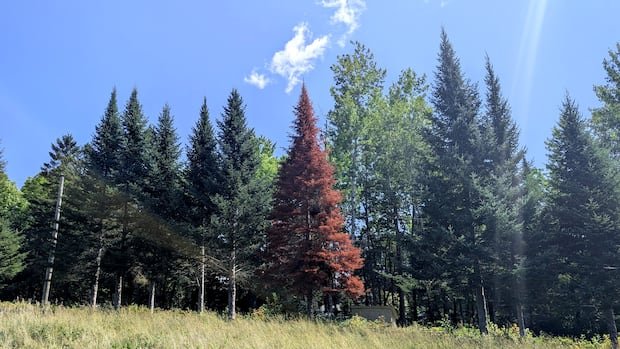

Balsam fir trees in New Brunswick are exhibiting a concerning trend of turning red and perishing following the severe drought experienced last summer. This phenomenon has sparked worries about the future of this iconic provincial tree. Professor Anthony Taylor, a forestry researcher at the University of New Brunswick, has been actively engaged with woodlot owners witnessing the distressing effects firsthand. The once-vibrant evergreen trees, often sought after for Christmas decorations, are gradually wilting and succumbing to the drought-induced stress.
Taylor notes that the current situation aligns with previous occurrences observed after periods of hot and dry weather. He emphasizes that the warm and arid conditions, such as the recent drought, negatively impact the balsam fir’s growth capacity. Taylor, who has been dedicated to studying climate change’s impact on New Brunswick’s forests, highlights similar die-offs of balsam fir trees following exceptionally hot and dry summers in 1986 and 2018.
Explaining the physiological response of the trees to drought conditions, Taylor elucidates that they halt the photosynthesis process prematurely, impeding their growth cycle. Consequently, the trees fail to generate the necessary energy reserves for vital metabolic functions and defense mechanisms. This compromised state leaves the trees vulnerable, particularly when already stressed by external factors like pests or pathogens, escalating the likelihood of widespread die-offs.
Furthermore, the balsam fir’s shallow root system exacerbates the challenge of accessing sufficient water during extended dry periods. Peter McKeil, a woodlot owner in Burtt’s Corner, attests to observing the distressing transformation of his balsam firs since June, with the trees progressively turning red from their lower branches upward. McKeil estimates a significant loss of approximately 100 trees so far, prompting him to adapt his harvesting practices to salvage value from the remaining trees before further losses occur.
Concerned about the future of the balsam fir species in light of escalating climate change impacts, McKeil foresees a grim outlook, especially in southern New Brunswick. He underscores the urgent need for climate action to address the deteriorating environmental conditions that are pushing these cold-weather trees toward extinction or migration to more northern regions.
Taylor underscores the symbolic significance of the red trees as a visible indicator of the adverse effects of climate change on New Brunswick’s beloved balsam firs. He likens this phenomenon to a warning signal, urging society to prioritize sustainable practices and reduce reliance on fossil fuels to mitigate climate change’s rapid progression. Taylor’s research aims to raise awareness and drive meaningful action towards preserving the ecological balance and safeguarding the future of the province’s iconic balsam fir trees.