

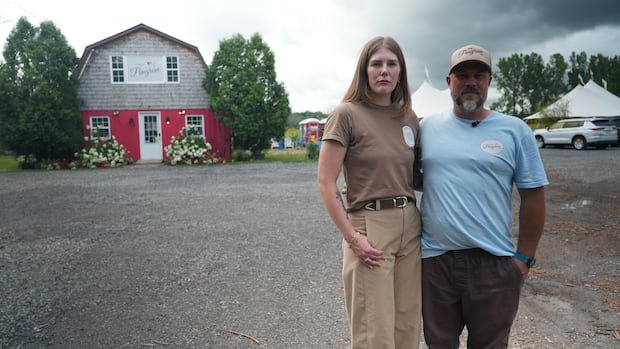

Three years after achieving his lifelong goal of owning a farm near his childhood home, Matt Penney and his partner were deceived in a scam that cost them $20,000 and derailed their business expansion plans. Penney expressed how disheartening it was to see their dream shattered and the impact it had on every aspect of their operations.
In April, Pengrove Farms, known for selling premium locally sourced meat and regional products, was approached by a company posing as a catering business. The initial transaction seemed routine with no apparent red flags or suspicions. However, issues arose during the subsequent order when part of the payment process failed, casting doubts on the legitimacy of the transactions and highlighting the vulnerability of small businesses in Quebec to fraudulent schemes.
By mid-June, Square, the payment processing platform used by the farm, alerted the family that all transactions with the supposed caterers, totaling approximately $20,000, were fraudulent. Shockingly, the onus fell on Pengrove Farms to reimburse Square for the financial loss, putting immense strain on the family-run operation.
Alana Cosgrove, the co-owner of Pengrove Farms, emphasized the significant impact of losing such a substantial amount of money, stressing the challenges of maintaining business operations while still needing to pay suppliers. The scam, built on establishing trust, involved the fraudsters developing a rapport with the farm owners, engaging in personal conversations, and even physically collecting orders under the guise of full payment.
Andréanne Bergeron, a criminology professor at L’Université de Montréal, highlighted the sophistication of such scams, which exploit trust to conduct larger fraudulent transactions before disappearing. She underscored the psychological aspect of trust-building in these fraudulent schemes, making it challenging for businesses to operate differently once trust is established.
In Quebec, payment platform websites lack the regulatory oversight afforded to banks or insurance companies, leaving merchants like Pengrove Farms liable for chargebacks in the event of fraud. Frédérique Lissoir, a legal expert and professor at the University of Ottawa, noted the absence of protections for businesses under current laws, contrasting it with jurisdictions like the European Union and the United Kingdom, which have implemented measures to safeguard businesses from fraudulent activities.
The family’s experience prompted calls for policy changes to enhance protections for small businesses against fraud. Despite the setbacks, community support, including a successful GoFundMe campaign, has provided a glimmer of hope for Pengrove Farms as they strive to recover and raise awareness about their ordeal.