

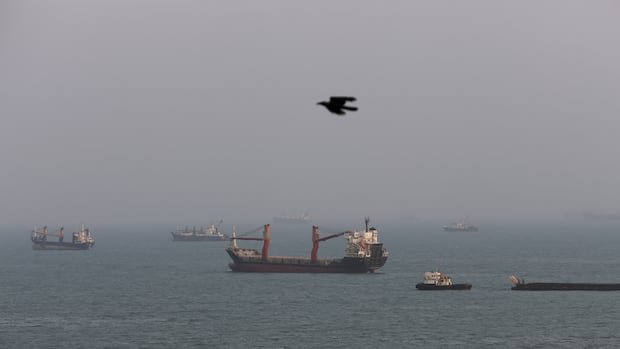

U.S. President Donald Trump declared on Tuesday that there were no ongoing discussions with Iran and affirmed that the Strait of Hormuz was operational, contradicting Iran’s claim that the crucial water passage was still closed to shipping. The diminishing chances of a resolution to the nearly six-month conflict led to a rise in oil prices, a decline in stock markets, and an increase in borrowing costs for major economies, including the U.S., due to concerns about long-term inflationary and fiscal consequences.
Following the expiration of a temporary ceasefire agreement on Monday, a senior Iranian official stated that Iran was transitioning to a “fully offensive” military stance due to the diplomatic impasse. Despite this, no new attacks were reported by either side on Tuesday.
President Trump emphasized on Truth Social that there were no ongoing or scheduled talks with Iran and reiterated the enforcement of a Naval Blockade, confirming the openness of the Hormuz Strait with the removal or detonation of all water mines.
Despite optimistic remarks by Jared Kushner, Trump’s son-in-law and special envoy, indicating ongoing and intensive talks with Iran, the conflict has evolved into a prolonged standoff. The U.S. continues to aim at preventing Iran from obtaining a nuclear weapon, a challenging task given the enriched uranium believed to be hidden at previously targeted sites by the U.S. military.
In the midst of assertions by Trump regarding improvements in the Gulf situation, reports persisted of attempts to disrupt shipping activities. The United Arab Emirates reported the detection of two ballistic missiles launched from Iran, marking the first incident since an earlier strike on the Fujairah port. The UAE suspended trade activities with Iran, citing regional escalation undermining peace and security.
Reports emerged of a vessel being hit by an unidentified projectile while transiting the Strait of Hormuz, causing engine room damage and injuring a crew member, as confirmed by the United Kingdom Maritime Trade Operations. The Omani Coast Guard provided assistance to the affected crew, with no immediate response from Tehran.
Top Iranian negotiator Mohammad Baqer Qalibaf affirmed that the strait would remain closed until the U.S. fulfilled the conditions of an interim deal signed in June. These conditions include lifting the blockade on Iranian ports, removing oil sanctions, releasing frozen assets, and ceasing threats and military activities on all fronts.
Despite remaining open to dialogue with the U.S., Iran maintains its stance of not equating negotiations with surrender, as stated by Mohammad Mokhber, an adviser to Iran’s supreme leader. Iran asserts readiness to defend its security, dignity, and allies while avoiding war.
As the conflict continues, concerns persist about potential economic repercussions and the impact on the stability of the Islamic Republic. The conflict has resulted in significant casualties, with Iran conducting bombing operations in various countries. Brent crude oil futures have seen a substantial increase during the conflict, reaching $126 US a barrel at the peak.
An official from the U.S. administration reiterated the possibility of imposing further economic pressure on Iran through additional sanctions, emphasizing the range of options available to the president in the coming months.