

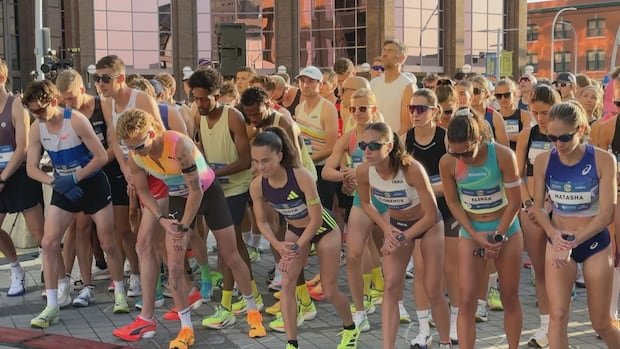

Two days post the Edmonton Marathon, the race director issues an apology for an accounting error resulting in race courses being longer than intended due to detour miscalculations. The acknowledgment aligns with suspicions held by many runners.
In a statement released on Tuesday, Edmonton Marathon race director Tom Keogh disclosed that both the half-marathon and marathon courses were 674.7 meters longer than initially believed. Keogh accepted responsibility for the oversight, attributing it to a mistake in calculating detour-related adjustments.
Keogh emphasized that the error was owned by the Edmonton Marathon and expressed regret for any inconvenience caused to participants. Prior to the statement, concerns were raised by elite and amateur runners regarding the race distances, with some runners convinced they had run a longer distance.
Despite previous assertions of correct course measurement, Keogh admitted on Tuesday that an error had occurred during the certification process. Athletics Canada, the governing body for the sport, had expressed confidence in the course measurement process but had not issued a statement regarding the updated information from the Edmonton Marathon.
The Edmonton Marathon is collaborating with Athletics Canada and other relevant parties to address the impact of the error on this year’s results, particularly for qualification in major running events like the Boston Marathon. A runner, Mitch Walz, shared his disappointment after achieving a time that would have qualified him for Boston, only to realize that the adjusted distance affected his official finishing time.
Keogh assured participants that steps would be taken to prevent similar errors in the future by reviewing certification processes. The Boston Athletic Association outlined its stance on adjusted results for qualifying times, indicating a possibility for participants who surpassed the required distance but still met the marathon’s standard time to be considered.