

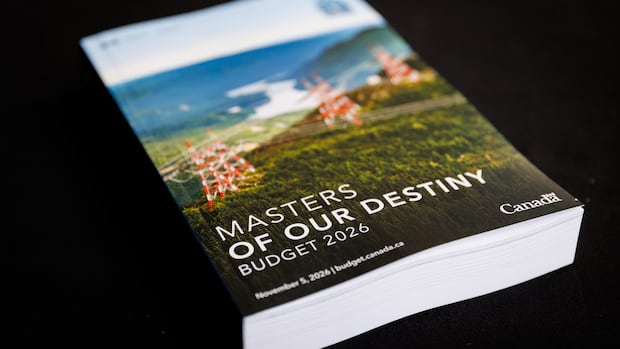

The 2026 budget proposed by the federal government allocates billions for investments in Canada’s mining and forestry industries.
Specifically, the budget outlines a $6.5 billion investment over the next six years for the forestry industry, which will support initiatives in forest management, supply chains, and modernization.
This investment includes $500 million allocated for forest management and fibre supply chains, $2 billion to assist businesses in upgrading their facilities and equipment, and $4 billion earmarked for significant projects such as biofuel and biorefinery facilities.
Adrian Smith, who serves as the policy director at the Ontario Forest Industries Association, noted that this funding could enable the industry to develop products that attract a broader array of buyers.
“The budget provides some funding aimed at supporting the forest sector to innovate into new, higher-value, value-added forest products,” Smith remarked.
He explained that the creation of these products could assist the industry in diversifying its trade and reducing reliance on the United States.
-
Video
It’s federal budget day. Here’s what you should know
-
Province to fast-track approvals for new gold mine in northeastern Ontario
The forestry sector in Northern Ontario is experiencing challenges due to U.S. trade policies. Smith indicated that lumber faces a combined tariff and duty rate of approximately 35 percent.
He also highlighted the consolidation within the pulp and paper industry as a further challenge for the area. “We currently have significantly fewer pulp and paper mills in northern Ontario than we did a decade or more ago. At present, we are down to three,” Smith stated.
This reduction has created difficulties for sawmills and panelboard manufacturers seeking markets for their surplus materials.
According to Smith, investments in bioenergy and biofuels could open up new avenues for utilizing those forestry byproducts.
Mining sector advocates for innovation and infrastructure
The mining industry has also expressed appreciation for the federal budget’s emphasis on investment and innovation.
The Ontario Mining Association highlights that the federal budget proposes $2.3 billion for mining and critical minerals.
In a statement to CBC News, the association’s president Priya Tandon stated that these investments have the potential to attract new projects, bolster existing operations, and enhance domestic supply chains.
Douglas Morrison, the president and CEO of the Centre for Excellence in Mining Innovation in Sudbury, emphasized that while investment in innovation is crucial, Canada must also ensure that new technologies are effectively implemented.
“For many years, Canada has invested in research and development but has not sufficiently focused on innovation and commercialization,” Morrison explained.
-
Province to fast-track approvals for new gold mine in northeastern Ontario
-
In-Depth
First Nation sounds alarm over Ontario proposal to prevent ‘obstruction’ to development
He noted that technologies that remain uncommercialized do not contribute to the economy.
Morrison also expressed concerns regarding the outdated technology used by major mining firms, stating that some ore production and waste management systems are over 40 years old.
He pointed out that newer technologies, such as autonomous mining processes, could enhance productivity and improve safety in challenging underground conditions.
However, Morrison stressed that inadequate transportation infrastructure poses a significant obstacle to establishing new mines in Northern Ontario.
“Without substantial improvements to the northern highway infrastructure, it will be exceedingly difficult for us to envision the opening of many new mines in the near future,” he asserted.
Local communities seek to reap benefits
The Northwestern Ontario Municipal Association has also urged enhancements to the Trans-Canada Highway, especially highways 11 and 17.
This organization states that these routes are vital transportation arteries linking eastern and western Canada, facilitating the movement of goods, resources, and individuals.
Rick Dumas, president of NOMA, remarked in a news release that “a stronger Canada goes through Northern Ontario,” emphasizing the region’s wealth of natural resources and transportation connections.
The Métis Nation of Ontario also sees promise in the forestry investments, suggesting they could foster greater Métis involvement in the sector.
Nonetheless, the organization cautions that modernization and automation do not guarantee local employment or shared prosperity.
In a statement to CBC News, Métis Nation of Ontario President Margaret Froh emphasized that these investments should be accompanied by “Métis-specific skills training, retraining, and employment assistance,” along with consultations and respect for Métis rights and land-based activities.
“The real measure of these investments will be whether they generate sustainable local jobs, strengthen Northern communities, enhance Métis business ownership and participation, and respect Métis rights,” Froh asserted.
The budget does not clarify how much of the forestry funding will be allocated to northern Ontario or which specific projects will be supported in the region.