

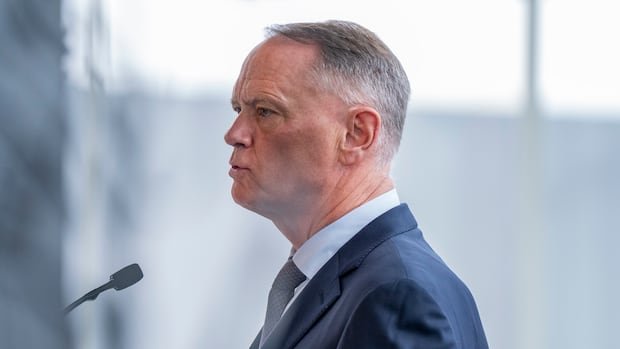

Canada’s Minister of Defence has announced a review of a directive from 2025 that dictates the languages used in military workplaces due to recent concerns. In January 2025, changes were made by the Department of National Defence (DND) and the Canadian Armed Forces regarding language requirements for workplace activities and services like internal meetings and documents.
Previously, units were categorized as English, French, or both, causing challenges for organizations in unilingual areas to meet language obligations and leading to complaints and frustrations. The directive DAOD 5039-2, implemented in January 2025, aligned internal language requirements with the language designation of the office location under the Official Languages Act. Consequently, only workplaces in bilingual regions such as New Brunswick, the National Capital Region, and parts of northern Ontario were mandated to use English and French exclusively.
These modifications did not impact communication with the public or military families. The military still emphasized the use of both official languages to promote inclusivity and uphold Canada’s linguistic diversity. However, a blog post last month criticizing the changes drew media attention and backlash from advocates and critics of official languages, alleging a weakening of French language protection in a significant federal department.
In response to the concerns, Defence Minister David McGuinty stated that a review of workplace language designations would be conducted to assess the application of language-of-work requirements and ensure alignment with operational needs and language rights of the Defence Team. The timeline for this review was not specified.
Following this announcement, the Conservative Party urged McGuinty to immediately reverse the changes, arguing that Francophone members should not face limitations in working, commanding, or advancing professionally in French simply based on their location in predominantly English-speaking regions.