

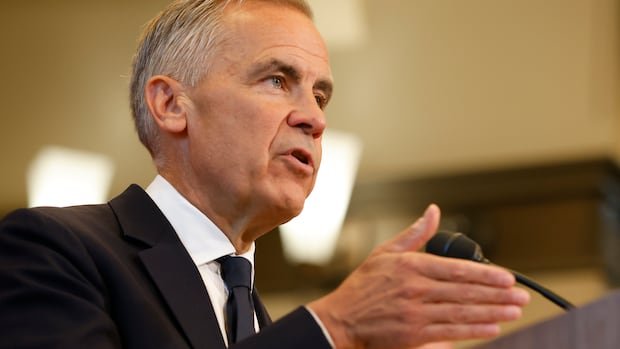

Prime Minister Mark Carney instructed his negotiators to cease discussions following the introduction of unacceptable demands by the Trump administration regarding culture, autos, and sovereignty. Carney expressed that the U.S. approach to the talks indicated a lack of interest in establishing a genuine economic partnership with Canada.
Speaking candidly, Carney highlighted that the U.S. tends to treat trade deals as tentative agreements, contrasting Canada’s firm stance and unified government. He emphasized that Canada could not agree to the demands made by the U.S., as they were deemed excessive and insufficient.
The prime minister disclosed that the U.S. expressed concerns about Canada’s support for French culture, the presence of French-language media online, and the bilingual labeling requirement on products sold in Canada. Carney firmly stated that these issues were non-negotiable from the Canadian perspective.
Regarding the automotive sector, Carney mentioned that the U.S. sought unfair treatment for Canadian-made parts and proposed exemptions for specific vehicles from tariffs without justification. These late demands were deemed detrimental to Canada’s automotive industry in the long run.
Ontario Premier Doug Ford applauded Carney’s decision to halt negotiations, asserting Canada’s readiness to engage in a trade conflict with the U.S. Ford criticized the proposed deal as unfavorable to Ontario’s key sectors such as auto and steel manufacturing.
Carney underscored that the U.S. aimed to undermine Canada’s sovereignty by introducing measures that would restrict its ability to engage in other trade agreements globally. The prime minister condemned these attempts as unacceptable, emphasizing Canada’s commitment to free trade.
Highlighting the lack of unity in the U.S. administration during the negotiations, Carney noted that the last-minute changes derailed the progress achieved over months of discussions. The failure to reach an agreement triggered the imposition of tariffs on Canadian products by the U.S.
Conservative Leader Pierre Poilievre expressed disappointment over the U.S. tariffs and pledged support for actions to safeguard Canadian industries. He emphasized the importance of fair trade and vowed to advocate for tariff-free trade to protect Canadian workers and businesses.
University of Calgary economist Trevor Tombe warned of potential job losses due to the tariffs, estimating significant impacts on Canada’s job market. He highlighted the potential job losses across various provinces and sectors, emphasizing the need to protect Canadian jobs amid the trade dispute.
Carney reassured that Canada would support businesses affected by the tariffs and announced plans to release details of support measures in the coming week. He pledged ongoing support for impacted businesses beyond the current administration’s term to mitigate the economic repercussions of the trade dispute.