

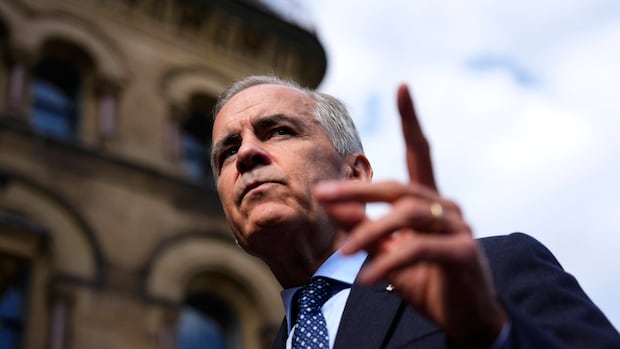

Last spring, Prime Minister Mark Carney convened leaders from the globe’s major economies in the scenic mountains of Kananaskis Country, shortly after his election victory. He approached discussions with U.S. President Donald Trump on trade while the notion of Alberta’s separation from Canada felt like a distant concern.
At that time, Trump remarked, “Our main focus is trade and specifically trade with Canada,” standing alongside Carney during his first visit to Canada since 2018. “I’m confident we can reach an agreement.”
Fast forward a year, and Carney is again hosting significant discussions in the Rocky Mountains of his home province, this time to strategize for the upcoming parliamentary session with his cabinet, energized by a series of byelections where his Liberal party performed exceptionally well.
However, the optimistic outlook of 2025 feels a world apart from the current situation.
Trade disputes between Canada and the U.S. are escalating, and the possibility of Alberta leaving the federation has transformed into a more pressing reality.
According to David Coletto, the founder and CEO of Abacus Data, there’s little sign that Canadians are placing blame on the prime minister for the nation’s challenges at this time, yet they are still seeking clarity on the path ahead.
Coletto stated to CBC News, “There’s always a risk when potential job losses or rising costs are involved, particularly as we navigate a cost of living crisis, which is the top concern for many Canadians nationwide.”

In a clip from a 15-minute explanatory video released by Prime Minister Mark Carney’s office on Tuesday, Carney mentions that U.S. trade negotiators sought to make Canada ‘even more dependent on them, not less.’
The prime minister is steadfast in justifying his choice to decline the proposed new trade agreement with the U.S. to safeguard Canada’s sovereignty, even as officials from the Trump administration attempt to persuade the public that Carney’s withdrawal was politically motivated.
Currently, Carney enjoys a peak in popularity, with approval ratings reportedly outpacing those of his predecessor, Justin Trudeau, at this stage in his term. Coletto notes that personal attacks from the White House are unlikely to alter this situation anytime soon.
“The chance that Canadians would place more trust in Donald Trump than in Mark Carney is quite low,” Coletto remarked.
He continued, “We’ve always presumed that there would be a limit to the public’s patience, but I’m beginning to question that. As long as people predominantly believe that the most significant threat to their quality of life originates from Washington rather than from Ottawa, the prime minister and his government will likely have more time.”
Shift from U.S., national unity on the agenda
As the two-day cabinet planning session with ministers and secretaries of state commences, no announcements have been made regarding whether Ottawa will retaliate against the latest actions taken by the Trump administration.
The Trump administration is increasing tariffs on more Canadian products to 50 percent, which includes items such as mattresses and motorboats. They are also set to ban certain Canadian imports, including most alcoholic beverages, select dairy goods, and motorcycles by the month’s end.
This escalation follows Ottawa’s imposition of retaliatory tariffs on over $27 billion worth of U.S. imports, a response to the 50 percent tariffs that the Trump administration applied to a comparable amount of Canadian goods last month after Carney halted trade discussions.
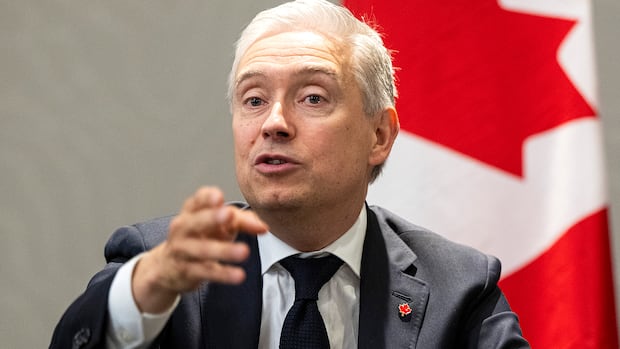
Finance Minister François-Philippe Champagne stated that Canada is still evaluating the impact of the ongoing trade conflict with the U.S., asserting the country’s position of strength. Meanwhile, Conservative leaders reiterated their calls for an early Parliament session.
The cabinet planning session will center on the shift Carney aims to initiate, redirecting Canada away from its heavy dependence on the U.S.—its principal trading partner—while bolstering the economy and fostering relationships with other nations.
Ministers and secretaries of state are anticipated to come prepared to defend their activities and propose strategies as the nation grapples with what Carney labels an unparalleled crisis.
The forum will also address the topic of separatism, occurring shortly before a referendum in which Albertans will be asked if they wish to remain part of Canada or consider a future vote on secession.
Ahead of the cabinet meeting, some of Carney’s leading ministers, including Natural Resources Minister Tim Hodgson, traveled across the province. Hodgson was in Clive to launch a carbon-capture initiative.
“We are in a trade war, a trade war we did not choose, but one we must prevail in,” he remarked. “Canada didn’t seek a reality where energy security equates to economic security and national security. However, that is the current reality we face.”
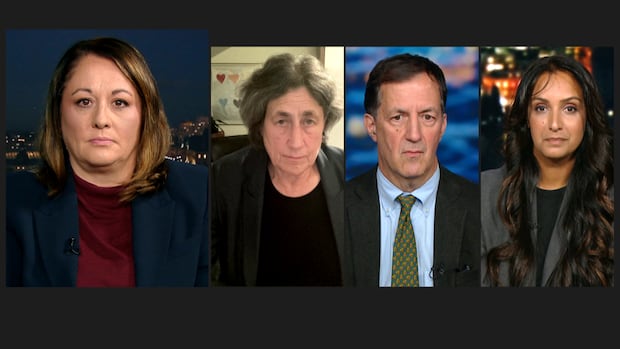
At Issue this week: With Canada’s $28 billion reciprocal tariffs prompting additional U.S. tariffs and outright bans on various Canadian products, the At Issue panel analyzes Canada’s approach, potential next steps, and the implications of this trade turmoil for politics and national unity.
During an armchair discussion hosted by the Edmonton Chamber of Commerce, Finance Minister François-Philippe Champagne was asked about the potential for resuming talks with the U.S.
“At the appropriate moment, further discussions will take place,” Champagne responded. “Canada is a significant nation, a G7 member, and a NATO ally… and Canada is a substantial customer. We purchase more from the United States than Japan, the UK, and Germany combined.”
“Any actions taken will influence both sides of the border.”
Guests set to inform the cabinet will reflect the anxieties surrounding both the trade conflict and Alberta’s separatist sentiments.
The guest list includes the mayors of Calgary and Red Deer, pollsters like Janet Brown, recognized for her analysis of Alberta’s political climate, along with Ian Bremmer, the founding political scientist of Eurasia Group.
Additionally, Ukrainian President Volodymyr Zelenskyy, who arrived in Calgary on Wednesday, will also make a brief address to the cabinet in Banff.
Notably absent from the guest list are experts focused on affordability or economic issues, a contrast to January 2026 when Carney and his ministers consulted with Food Banks Canada CEO Kirstin Beardsley.
Coletto suggested that a seeming disregard for economic concerns might pose a long-term disadvantage for Carney.
“I believe what Canadians desire most is reassurance,” Coletto noted. “Reassurance that their government recognizes the risks they face and is actively working to alleviate them while also exploring long-term solutions to enhance Canada’s strength.”