

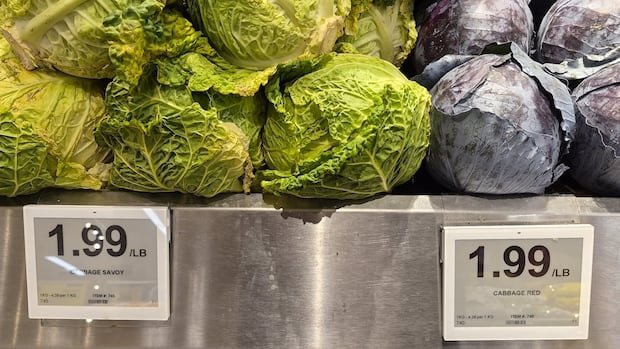

Loblaw has decided to reinstate country-of-origin labels on produce signs in its stores after facing significant backlash from customers. The controversy arose when shoppers noticed that the information indicating where the food was grown was missing from produce displays.
Karla Hennig, a dedicated “Buy Canadian” shopper from Penticton, B.C., expressed disappointment at the absence of origin details at her local Superstore, emphasizing the importance of transparency in food labeling. Similar changes were observed in Loblaw stores nationwide, except for Ontario and Quebec, where provincial regulations mandate specific labeling requirements.
In response to the policy change, many Loblaw customers took to social media platforms to voice their dissatisfaction, especially amid Canada-U.S. trade tensions and the renewed emphasis on supporting Canadian products. Edmonton resident Karl Mueller, upon discovering the lack of country-of-origin labeling at his Real Canadian Superstore, raised concerns through social media and correspondence with the chain’s headquarters.
Agricultural economist Ellen Goddard predicted Loblaw’s reversal of its decision, highlighting the heightened emotions surrounding the issue amidst trade uncertainties. In light of the public outcry and CBC News’s inquiry, Loblaw announced its commitment to assisting shoppers in purchasing Canadian products by reintroducing country-of-origin information on produce displays and using a “T” symbol for American products impacted by tariffs.
While some customers cautiously welcomed the news of Loblaw’s policy reversal, Mueller emphasized the significance of consumers’ influence in shaping corporate practices. Despite initially defending its labeling policy due to sourcing challenges, Loblaw acknowledged the importance of providing accurate origin information to consumers and committed to enhancing transparency in its stores.
The incident stemmed from Loblaw’s regulatory challenges, including fines and warnings from the Canadian Food Inspection Agency for misrepresenting imported food as Canadian in select stores. The public scrutiny and emphasis on consumer trust likely influenced Loblaw’s initial decision to remove country-of-origin labels for produce.
The CFIA clarified that federal regulations do not mandate country-of-origin labeling on store signage for products, including bulk produce. However, some consumers and experts have called for new legislation requiring grocers to disclose origin information for bulk produce to ensure transparency and informed consumer choices.