

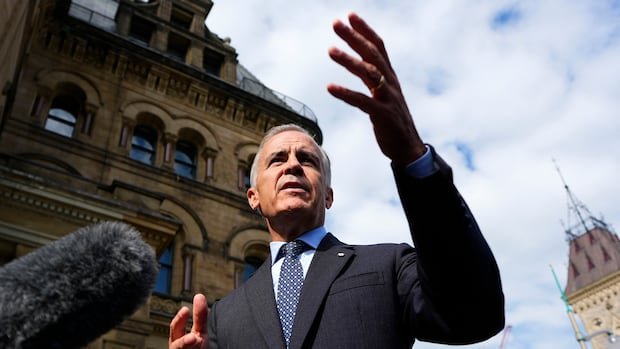

Prime Minister Mark Carney has rebuked comments made by U.S. cabinet officials that have disparaged Canada and its military. Carney stated that the remarks were inappropriate and urged a shift towards a more serious approach in trade negotiations. The Prime Minister’s response came in the wake of disparaging statements from U.S. Treasury Secretary Scott Bessent and U.S. Transport Secretary Sean Duffy regarding Canada’s navy and military capabilities.
Carney emphasized the need to move away from disrespectful behavior and focus on constructive discussions. He highlighted the importance of a more respectful dialogue to progress trade talks between the U.S. and Canada. The Prime Minister reiterated that Canada withdrew from negotiations due to last-minute unfair demands that would have hindered the country’s ability to engage in trade agreements with other nations and jeopardized important sectors like French-language media and bilingual product labeling.
In response to the deteriorating situation, Canada announced reciprocal tariffs on U.S. exports following the U.S.’s imposition of 50% tariffs on Canadian goods. Carney expressed optimism for a potential trade deal that respects Canadian sovereignty and cultural values. He underscored the significance of protecting Quebec culture and the French language in any trade agreement with the U.S.
Finance Minister François-Philippe Champagne is set to meet with U.S. Treasury Secretary Bessent at the G20 finance ministers’ meeting to discuss the trade dispute. Champagne emphasized the need for a serious and constructive approach in negotiations, stressing Canada’s firm stance on safeguarding key industries. The Finance Minister also highlighted Canada’s role as a vital source of food, energy, and critical minerals in the global landscape.
Despite the tensions, discussions at the G20 meeting aimed to address issues such as artificial intelligence, global trade imbalances, and the path to resolving the trade conflict at a leadership level. The ongoing dialogue between Canadian and U.S. officials reflects the complexities and challenges in reaching a mutually beneficial trade agreement.