

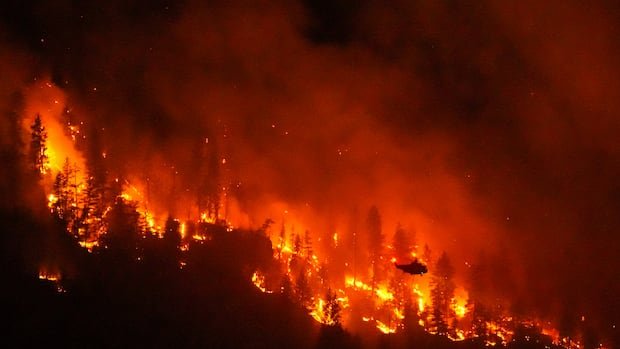

A recent study has highlighted the exacerbation of wildfires and permafrost thaw due to global warming, resulting in increased greenhouse gas emissions that accelerate climate change beyond current estimates. These climate “feedback loops” could potentially amplify warming by 20 to 30 percent this century, according to researchers from various U.S. institutions.
The study, published in Environmental Research Letters, sheds light on the significant impact of warming-induced emissions on global temperature rise. It emphasizes the importance of considering these feedback mechanisms in climate models to bridge the gap between policy targets and the Earth’s response to climate change.
Canada, with a substantial share of warming-induced emissions, is particularly vulnerable to these changes. The country is already experiencing accelerated warming, as highlighted in the recent Canada’s Changing Climate assessment, which predicts up to five degrees of warming by the end of the century.
The study underscores that the effects in Canada will not be confined locally but will contribute to global climate change. For instance, the unprecedented wildfires in 2023 released a billion tonnes of carbon, making them one of the top emitters globally.
Permafrost thaw in the Arctic, accelerated by rising temperatures, is a key concern. The study discusses the phenomenon of “abrupt” thawing, triggered by factors like wildfires and extreme weather events, leading to the sudden release of carbon from previously frozen organic material.
Additionally, wetlands play a crucial role in emitting methane, contributing to the warming-induced emissions. The spike in methane levels in the atmosphere, partly attributed to wetlands, underscores the need to include these ecosystems in climate models. The study emphasizes the impact of microbial activity in wetlands, driven by warmer temperatures, and highlights the significance of monitoring and studying these processes in Canada.
Overall, the research underscores the complex interplay between wildfires, permafrost thaw, wetlands, and greenhouse gas emissions, emphasizing the urgent need for comprehensive strategies to mitigate the impact of these feedback loops on climate change.