

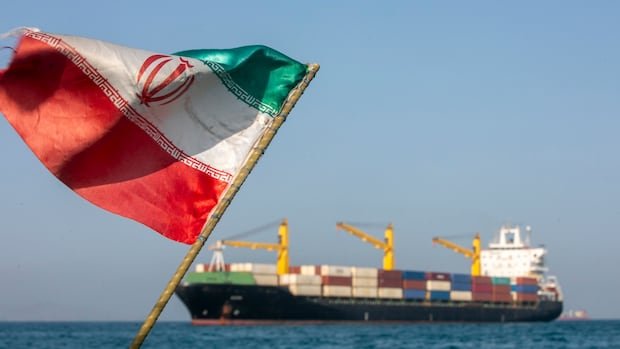

United States military forces conducted a strike on Iranian rocket launchers in the Strait of Hormuz on Sunday, marking the first military engagement in over a month. This action led to a swift Iranian response, breaking a period of relative calm in the ongoing conflict that has persisted for more than six months.
According to an anonymous official, forces affiliated with Iran’s Islamic Revolutionary Guard Corps (IRGC) were observed preparing to deploy rockets armed with sea mines into the strait. The U.S. military had recently completed the clearance of sea mines from the international shipping lanes within the strait.
Reports from semi-official news sources in Iran indicated hearing explosions near Larak Island in the strait. Subsequently, Iranian state television aired footage purporting to show ballistic missiles being launched by Iran towards U.S. bases in Jordan in retaliation for the American strikes. Jordan’s armed forces reported intercepting eight missiles that breached their airspace in the early hours of Monday.
U.S. military officials refuted Iran’s assertion that the recent American strikes were aggressive, describing them as a “limited, precise action” targeting suspected minelaying activities. The U.S. Central Command emphasized that the strikes were undertaken to safeguard civilian mariners, commercial shipping, and the unimpeded flow of global trade.
A resurgence of overt hostilities could pose significant risks to the region, where Iran has previously targeted U.S. military installations and infrastructure in Gulf nations since the conflict commenced on February 28. The last confirmed U.S. military operation against Iran occurred on July 29, involving strikes on numerous Revolutionary Guard installations, including coastal surveillance and defense sites.
In a shift from military tactics, the Trump administration recently announced a focus on escalating economic pressure as a means to resolve the conflict with Iran. This change in strategy involves threats to sanction any entity or country engaging in business with Tehran. Concerns have been raised about dwindling munition supplies following months of conflict, potentially compromising U.S. military readiness in other regions.
As the protracted conflict continues, President Trump’s earlier aspirations for a swift resolution appear to be waning. He expressed a lack of urgency in returning Iran to the negotiation table and reiterated his belief that the Iranian leadership is under significant pressure. Trump highlighted the substantial impact of joint U.S. and Israeli operations on Iran’s navy and air force, while Iranian officials claimed extensive financial losses due to the conflict.
Despite facing significant setbacks, Iran retains leverage through its actions in the strategically vital Strait of Hormuz, where a reduced number of vessels are navigating due to security concerns. The country’s possession of drones and missiles enables it to disrupt traffic in the strait, a critical passageway for global oil shipments. While Trump has insisted that the strait remains open, the reduced vessel traffic compared to pre-war levels indicates ongoing challenges.
Recent reports from a multinational coalition overseeing the strait highlighted ongoing disruptions to commercial traffic, with levels remaining below normal. Additionally, a tanker ship north of Khasab, Oman, in the strait was reportedly struck by an unidentified projectile on Saturday, according to the United Kingdom Maritime Trade Operations. No casualties or environmental damage were reported, and the responsible party remains unidentified.