

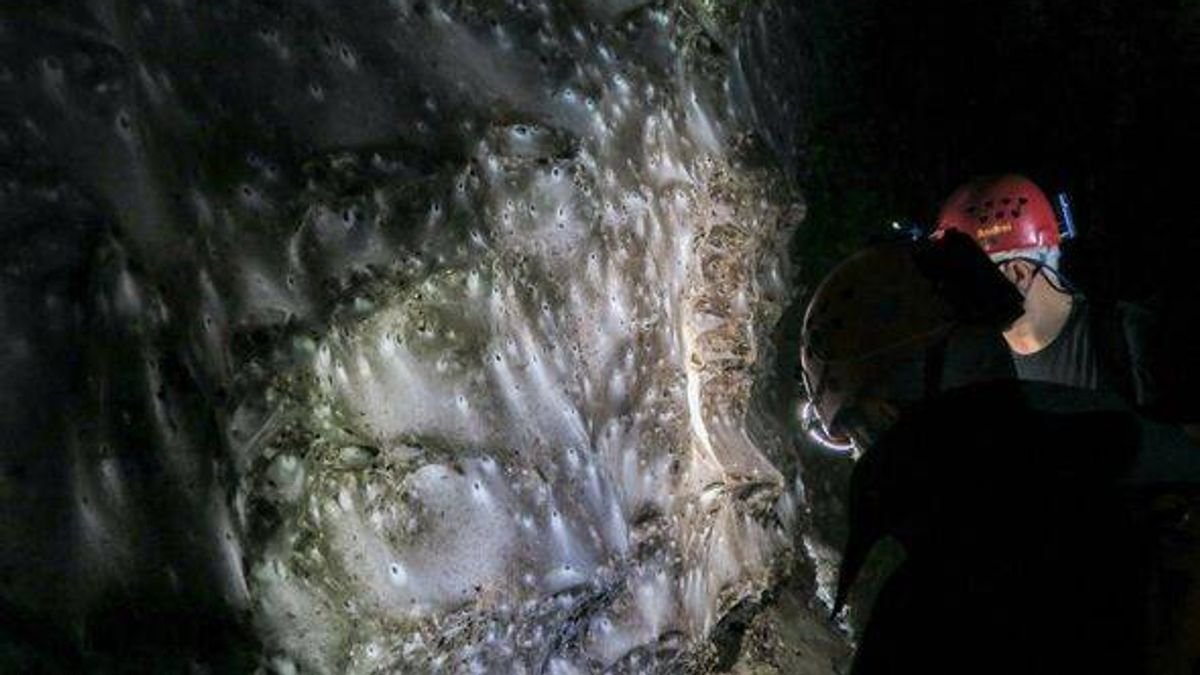

In a remarkable discovery, scientists have found what is believed to be the largest spider web in the world, serving as a home to over 100,000 eight-legged creatures. The immense shared web, captured in striking images, covers the wall of Sulfur Cave located on the border between Albania and Greece.
Uncovered in 2022 by cavers from the Czech Speleological Society and later examined by researchers, the gigantic web spans an impressive 106 square meters and accommodates two different spider species: 69,000 domestic spiders (T. domestica, barn funnel weaver) and 42,000 Prinerigone vagans (a type of sheet weaver spider), as per Discover Wildlife.
The cave, formed by sulphuric acid in a process involving hydrogen sulphide and oxygen, is a unique habitat. Not only is the scale of the spider web extraordinary, but it is also the first documented case of a web jointly created by multiple species.
The barn funnel weaver typically preys on smaller spiders, such as the sheet weaver, adding to the intrigue of this discovery. Scientist Serban Sarbu highlighted the surprise of finding such a large concentration of spiders in one cave, raising questions about their sustenance and dwelling conditions.
The absence of light and the availability of midges or flies for both spider species to feed on likely kept them inside the cave without the need to venture out, as reported by the BBC. The researchers, writing in the journal Subterranean Biology, suggested that the abundance of midges in the cave was a key factor driving the colonization by T. domestica.
Aside from the spiders, the cave also hosts various other creatures like scorpions, centipedes, bats, beetles, and chironomid fly larvae, which get ensnared in the webs upon reaching maturity. This intricate ecosystem showcases the interconnectedness of different species within the cave environment.
In a related development from October, the BBC highlighted the rediscovery of an endangered spider species, Aulonia albimana (a type of wolf spider), on the Isle of Wight after a 40-year absence. The find, made at the National Trust’s Newtown nature reserve, underscored the importance of habitat conservation and collaborative efforts in biodiversity preservation.
The detection of these unique spider populations sheds light on the diverse and fascinating ecosystems present in caves and nature reserves, emphasizing the significance of conservation efforts in safeguarding vulnerable species.