

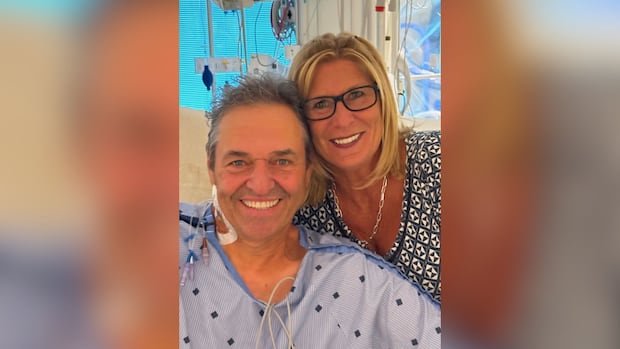

A 64-year-old man from Quebec has made medical history in North America by being the first recipient of a regenerated liver, thanks to an innovative technology that has the potential to significantly increase the number of viable livers available for transplant in its initial year. Gérard Landry, a resident of Nouvelle in Quebec’s Gaspé Peninsula, had been grappling with liver issues for 15 years, culminating in cirrhosis and liver cancer.
Prior to his liver transplant surgery, Landry received surprising news from his doctor at Montreal’s Centre hospitalier de l’Université de Montréal (CHUM) – his new liver had been regenerated using a novel machine, the Liver Assist. This cutting-edge technology allows medical professionals to assess and treat donated livers outside the body before transplantation, providing a chance to utilize organs that may have otherwise been deemed too risky for surgery.
Dr. David Hénault, a liver transplant specialist at CHUM, spearheaded the project and conducted Landry’s groundbreaking operation. Over a span of three years, the team had been preparing to utilize the Liver Assist system, which functions by connecting the donated liver to a machine circulating oxygen-rich fluid to mitigate damage caused by oxygen deprivation during organ preservation.
By simulating the conditions inside the human body, the technology enables doctors to evaluate liver functionality accurately. This advancement not only expands the pool of available livers but also decreases complications, reoperations, and hospital stays for suitable recipients. The potential impact is substantial, with estimations suggesting an additional 20 to 24 livers could be made available for transplantation annually through this technology at CHUM.
Dr. Hénault emphasized the transformative effect this innovation could have on patients awaiting liver transplants, citing Landry’s swift recovery post-surgery as a testament to the machine’s efficacy. Landry, who is currently recovering in Montreal with frequent hospital visits for monitoring, anticipates returning home to Gaspésie soon, eager to reunite with his family, friends, and horses.
In sharing his experience, Landry hopes to raise awareness about the importance of organ donation, underscoring that even the most advanced technologies are futile without a sufficient supply of donated organs. As he aptly put it, “if you have a horse without a rider, you don’t have a ride.” The successful transplantation of a regenerated liver marks a significant milestone in the field of organ transplants, offering new hope to patients in need of life-saving procedures.