

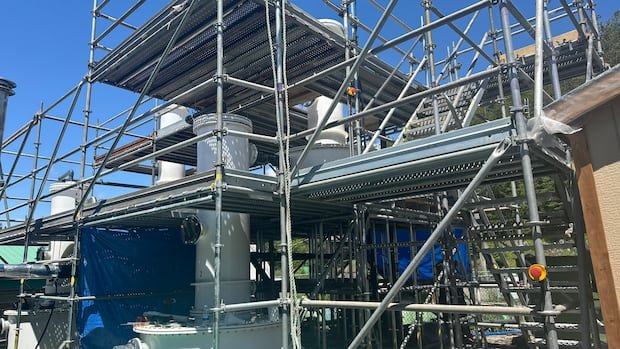

A startup in Nova Scotia is currently conducting trials on a technique to capture and sequester more carbon in the ocean, utilizing a novel pilot facility to validate the method. The ocean serves as a significant reservoir for excess carbon dioxide, having absorbed approximately 30% of all human-induced carbon emissions since the 1980s.
pHathom, the company behind the initiative, aims to enhance the removal of emissions from the atmosphere by capturing carbon dioxide and transforming it into a form suitable for secure storage in the ocean for thousands of years. The testing of this approach is taking place at the Huntsman Marine Science Centre in St. Andrews, New Brunswick.
Kimberly Gilbert, the co-founder and CEO of the company, emphasized the importance of demonstrating the safety and efficacy of the local solution to address the global issue of climate change. pHathom’s method replicates a natural process where raindrops absorb carbon dioxide from the atmosphere, subsequently converting it into bicarbonate upon contact with alkaline rocks like limestone.
The company’s technique involves a reactor that processes seawater by exposing it to the emissions from a biomass power plant, thereby increasing its acidity. The acidic water is then combined with small limestone particles in a tank, converting the carbon dioxide into bicarbonate before being reintroduced into the ocean with a pH level similar to regular seawater.
In addition to pHathom, other companies in Nova Scotia are exploring variations of carbon removal methods, specifically in the realm of alkalinity enhancement. These efforts include projects by Planetary and CarbonRun, each employing distinct strategies to mitigate carbon dioxide levels.
The pilot project by pHathom aims to capture 0.1 tonnes of carbon dioxide daily, with plans to expand operations in Nova Scotia next year by integrating the reactor into a facility transitioning from fossil fuel to biomass heating. Scaling up such technologies poses a challenge, as global efforts to limit warming require substantial carbon dioxide removal annually.
While the potential of ocean alkalinity enhancement as a climate mitigation tool is recognized, significant hurdles such as energy consumption and regulatory frameworks must be addressed. Despite these challenges, the urgency of addressing the climate crisis underscores the importance of exploring and advancing promising carbon removal technologies while concurrently transitioning away from fossil fuels.
Canada has been acknowledged as a leader in ocean alkalinity enhancement research, with recommendations urging governmental support for international implementation and regulatory standards. Despite shifts in climate policies impacting the financial viability of carbon capture projects, innovators like pHathom remain optimistic about the future role of their technology in combating climate change.