


Montreal authorities are discreetly expanding their array of AI-driven tools for monitoring vehicles and individuals throughout the city, sparking concerns about transparency and privacy rights.
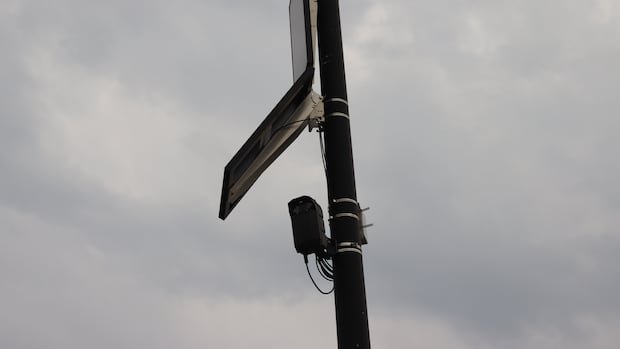
A high-tech camera capable of scanning and recognizing vehicles was recently observed by a Radio-Canada journalist on a lamppost along Henri-Bourassa Boulevard in Montreal’s Rivière-des-Prairies area. Following Radio-Canada’s report on the camera, it was promptly removed.
The device identified as a Cloudrunner CR-H2, produced by Montreal-based Genetec, as confirmed later by the Service de police de la Ville de Montréal (SPVM). Similar to the controversial Flock Safety cameras in the United States, this system not only reads license plates but also records specific vehicle attributes such as color, make, and model.
Unlike Flock cameras that share data in a centralized database accessible to multiple law enforcement agencies, Genetec’s system manages the gathered information within its own network. The SPVM emphasized that the captured images are solely accessible to investigators handling related cases.
Advocates for privacy rights have criticized the lack of transparency in deploying new technologies. Dominique Peschard from Ligue des droits et libertés, a Quebec human rights organization, emphasized the importance of keeping the public informed about law enforcement tools without compromising investigative work.
The utilization of Cloudrunner cameras forms part of SPVM’s broader adoption of AI-driven technology. The SPVM acknowledged using iMotion ROC AI software by Rank One Computing to aid in reviewing extensive video footage. The SPVM clarified that the software does not involve facial recognition or biometric functions and operates on a closed offline network.
An internal privacy impact assessment by the SPVM highlighted civil liberties risks associated with the technology, including the potential investigation of innocent bystanders and discrimination based on visible social attributes. However, the assessment mentioned measures to reduce discrimination risks by configuring the software to search for objects rather than identifiable traits.
The SPVM’s acknowledgment of the Cloudrunner camera followed initial confusion, with Montreal Police Chief Fady Dagher initially unaware of the device. The chief later confirmed its use in targeting armed violence and vehicle thefts. Public records revealed Montreal’s contract with Genetec for Cloudrunner units, indicating a potential increase in camera deployment based on investigative needs.
Genetec’s vice-president, Andrew Elvish, assured that the technology respects privacy, with all data interactions logged. He emphasized the balance between privacy and security concerns, prompting a community discussion on trade-offs for safety.
In response to inquiries, a City of Montreal spokesperson clarified that they had not installed the Cloudrunner camera and directed deployment queries to the SPVM. The development of a voluntary security camera registry championed by Montreal Mayor Soraya Martinez Ferrada during the previous election campaign raised additional surveillance-related discussions.
In Quebec, the Commission d’accès à l’information mandates stringent objectives for public video surveillance, emphasizing the necessity of collected images to solve specific issues. Legal experts like Jean-François Latreille stress the importance of strict regulation to prevent privacy loss in public spaces.