

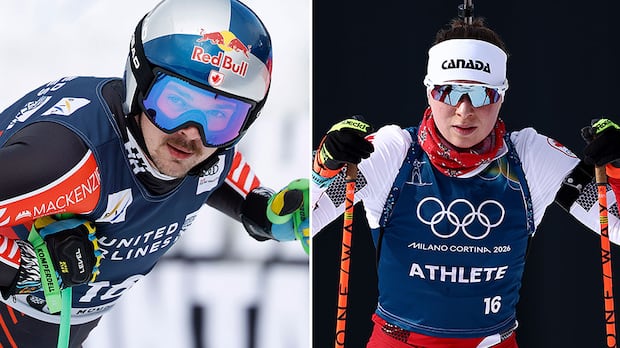

Two additional national sports organizations (NSOs) are collaborating.
On Tuesday, Alpine Canada and Biathlon Canada declared their intention to merge as part of a broader initiative aimed at modernizing and aligning the Canadian sports system.
“This represents a once-in-a-lifetime chance to rethink how we provide sports in Canada and foster a stronger future for athletes at all levels,” stated Andrew Baker, CEO and president of Alpine Canada. “The unification of Alpine Canada and Biathlon Canada will result in a more interconnected system that leverages the strengths of both sports.”
These ski organizations are following the example set by sliding sports, as Bobsleigh Canada Skeleton and Luge Canada announced their plans to merge in October. Additionally, the Canadian Olympic and Paralympic committees have also expressed a desire to collaborate more closely as of early November.
-
With increased funding, Canada’s sports leaders understand the expectation to enhance participation
-
A continuous project: Participation is the key focus as Canada’s sports future is highlighted at a national summit
This announcement follows Alpine Canada’s signing of a five-year, $25 million sponsorship agreement with Edmonton-based energy firm Capital Power in September, which was partially dependent on the merger.
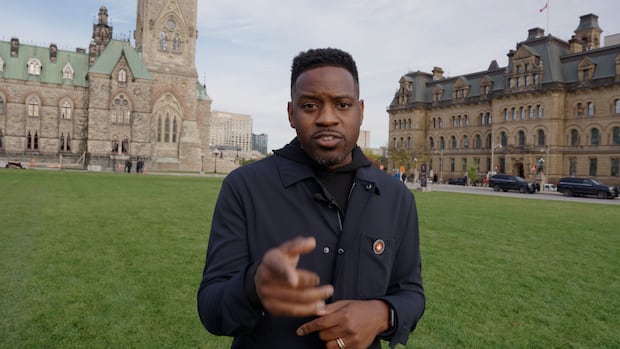
CBC Sports’ Donnovan Bennett engaged with Canada’s secretary of sport, Adam van Koeverden, and others to discuss the current state of Canada’s sporting system and potential pathways for rebuilding it.
Merger fulfills amalgamation requirement
This merger appears to meet the amalgamation requirement—an initiative first presented in the Future of Sport report, which labeled Canada’s sports system as “fragmented,” a sentiment later echoed by federal Secretary of State for Sport Adam Van Koeverden, who has articulated his vision amid a nine-year, $2.5 billion government investment in sports.
“By collaborating with Alpine Canada to consider the formation of a unified national sports organization, Biathlon Canada is bravely accepting the change with foresight and a commitment to creating new opportunities for Canadian biathletes at all levels,” commented Biathlon Canada CEO Kerry Dankers.
-
‘An abundance of ideas’: Canada’s sports leaders convene in Ottawa to discuss next steps
-
Rising costs of youth sports compel children to make early choices
“With the support of the Government of Canada facilitating this transformation and the distinctive backing from Capital Power, we have a remarkable opportunity to unite, modernize, and create a robust future for our sports,” they stated.
The amalgamation presents clear advantages, including the sharing of expertise, cost efficiencies, and enhanced consistency throughout Canadian sports, as highlighted in the organizations’ announcement on Tuesday.
However, a significant concern for NSOs considering mergers has been the fate of their provincial and territorial organizations (PTSOs). The merger of two NSOs could incorporate as many as 26 PTSOs, which might lead to excessive growth and a dilution of individual organizational authority.
Alpine Canada and Biathlon Canada confirmed that their PTSOs would continue to operate independently.
“Provincial and territorial organizations, clubs, coaches, officials, volunteers, and community partners form the foundation of Canada’s sports system. Their expertise, relationships, and connections to local communities will remain crucial to the success of both sports,” they emphasized in a statement.
In addition, financial motivations—or the absence thereof—have also been identified as obstacles to amalgamation.
With the commitment from Capital Power, alongside additional core funding from the government—Alpine Canada received $2.775 million while Biathlon Canada was allocated $1.04 million—this situation has shifted.
In an October interview with CBC Sports, Baker mentioned that a potential merger would focus on achieving “efficient growth.”
“We are not discussing millions in operational cost savings, likely not even hundreds of thousands. We are probably looking at savings in the thousands. So, that’s not the transformative aspect of this initiative. The real transformation and modernization stem from a stronger foundation for collaboration across the system, shared best practices and insights, and the ability to pool marketing resources,” he explained.
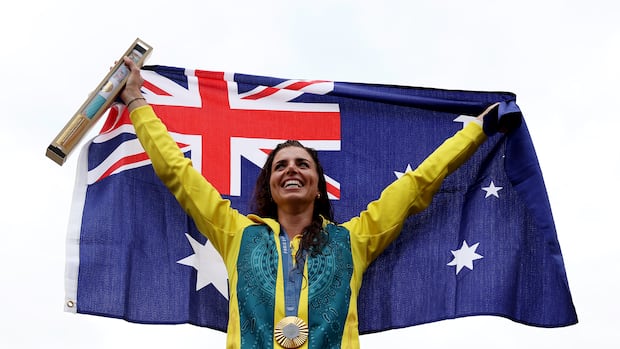
CBC Sports’ Karissa Donkin explores the inner workings of Australia’s sporting system and considers what lessons Canada might learn from the way the country manages its programs.
Simplified process for Alpine Canada
For Alpine Canada, this endeavor may be somewhat less complex, as the organization already oversees three sports: alpine, Para alpine, and ski cross.
Baker indicated that the organization’s initial action following the Capital Power agreement was to eliminate team fees for athletes.
Now, in conjunction with biathlon, the focus will be on fulfilling van Koeverden’s other stated priorities.
“Our goal is to enhance our athletes’ performance. We aim to increase participation. We want more Canadians on ski hills and engaged in various sports, and we strive to create more accessible pathways,” Baker remarked in October.
“Thus, we promptly removed team fees from our development and national teams. This is the essence of what we aim to achieve from the Capital Power perspective. It’s about the potential for growth. What’s particularly exciting is that it’s not just Alpine, but Alpine combined with another sport.”
-
Canadian sports organizations and corporate sponsors view grassroots investment as a vital opportunity
-
A New Game Plan: How Australia’s sports dominance might provide Canada with insights on repairing its ‘broken’ system
Meanwhile, Capital Power COO Ferio Pugliese anticipated further collaborations among multiple organizations.
He referenced the model of the U.S. Ski and Snowboard Federation, which manages a variety of disciplines including alpine, cross country, freestyle moguls, freestyle aerials, freeski, snowboard, ski jumping, Nordic combined, Para alpine, and Para snowboard.
“This is a gradual approach. Let’s consolidate this first. Let’s achieve one more merger. Let’s clarify the governance. Let’s collaborate with the NSOs. By this time next year, we may have a center of excellence or an example to demonstrate how this can be done, showing that athletes benefit from it, the organization improves, and resources are allocated effectively,” Pugliese stated in an October conversation with CBC Sports.
“And then we can use that as a benchmark to identify the next sport that could consider amalgamation. We would welcome more organizations joining us each year.”
Currently, the merger involves only alpine and biathlon. However, if successful, the concept of amalgamation—extending beyond ski sports and throughout the entire system—could gain momentum.
Tag: rewrite-pending