

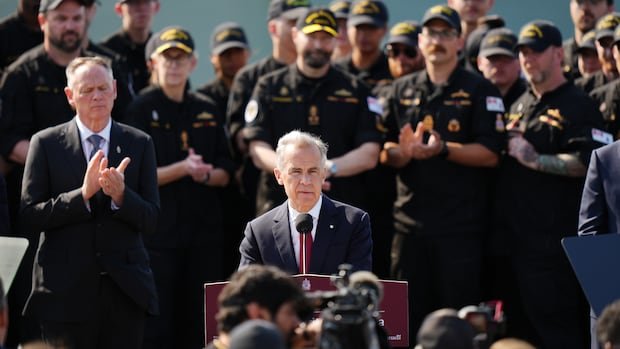

Canada is in talks to purchase around twelve submarines from German shipbuilder ThyssenKrupp Marine Systems (TKMS), as revealed by Prime Minister Mark Carney. This decision concludes a competitive process to replace Canada’s aging fleet of Victoria-Class submarines. The bids from South Korea with Hanwha Ocean and Germany and Norway with TKMS not only included submarine procurement but also commitments to invest in and contribute to Canada’s economy.
TKMS proposed to supply four Type 212CD submarines to the Royal Canadian Navy by 2036, with the first one expected by 2034. This aligns closely with the offering from South Korea, which pledged to provide four submarines by 2035. The timing of the delivery is crucial as the navy’s current four Victoria-Class submarines are due for retirement in the mid-2030s, with only one currently operational.
Prime Minister Carney emphasized that choosing the TKMS bid was a challenging decision due to both suppliers meeting the Royal Canadian Navy’s high capabilities. The agreement now moves into negotiations for the potential procurement of up to 12 submarines.
Carney confirmed that the deal includes a requirement for 100% of the federal government’s investment value to be matched by economic benefits to Canada. TKMS is expected to invest “tens of billions of dollars” in various sectors, such as space, munitions, autonomous technology, critical minerals, and research and development, contributing significantly to the Canadian economy.
The TKMS contract is anticipated to create over 100,000 well-paying jobs across Canada, with the initial phase focusing on submarine construction and involving various skilled workers like welders, engineers, and researchers.
Germany’s bid included proposals for significant investments in Canada, such as constructing maintenance facilities, manufacturing torpedoes, and developing anti-torpedo systems. The Germans also suggested transforming Manitoba’s Port of Churchill into an export hub for Canadian liquefied natural gas and critical minerals. Additionally, a carbon capture facility using TKMS technology in partnership with Alberta was proposed.
The TKMS platform’s compatibility with NATO forces was highlighted, as it is designed for Arctic waters and fully interoperable with NATO, enhancing communication and joint mission capabilities. This deal further strengthens ties with Germany and aligns with Canada’s LNG production targets.
The announcement is expected to benefit various regions in Canada, particularly Halifax and the West Coast, with significant economic activity anticipated in shipbuilding and maintenance. Carney emphasized that this deal marks the beginning of positive impacts throughout the country.