

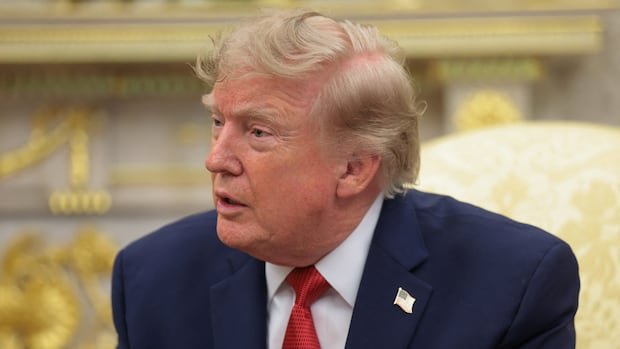

U.S. President Donald Trump has once again issued a warning to Oman while Iran discloses that it is collaborating with the Gulf Arab nation on a strategy to regulate shipping activities through the Strait of Hormuz. The complete reopening of the strait has been a crucial demand from the U.S.
Simultaneously, the 60-day negotiation period aimed at reaching a peace agreement between the United States and Iran was coming to an end, with no mention of an extension and both parties appearing as distant in their positions as they were at the beginning.
The latest updates on Monday in the U.S. and the Israel-Iran conflict include the nearing deal between Iran and Oman. Iran has announced that it has finalized a plan with Oman for ships to navigate the Strait of Hormuz, which connects the two nations, and they are now in the process of finalizing the specifics for a joint statement.
According to Iranian Foreign Ministry spokesperson Esmail Baghaei in Tehran, an agreement has been reached regarding the transit route map. While specific details are yet to be disclosed, previous reports suggest that the agreement would allow ships to enter the strait near Iran and exit through Oman without incurring any fees during an interim period.
The U.S. has been pushing for a mutually acceptable arrangement to reopen the strait before lifting its blockade on Iranian ports. Iran had effectively closed the strait, a crucial passage for about one-fifth of the world’s traded oil, following attacks by Israel and the U.S. on February 28.
In a previous incident, Trump warned Oman in an interview with Fox News reporter Trey Yingst, stating that the U.S. would take military action against Oman if it obstructs operations, using strong language to emphasize the point. This is not the first time Trump has directed threats towards Oman, as he previously stated in May during a cabinet meeting that Oman needed to comply with international standards or face consequences.
On the other hand, the United Nations Secretary-General António Guterres has urged Iran and the U.S. to resume peace talks, emphasizing that a military solution to the conflict is not viable. Guterres also highlighted the need for both countries to tone down their recent aggressive rhetoric.
Furthermore, Houthi rebels in Yemen, backed by Iran, asserted that they launched an attack on a ship and four military boats in the Red Sea near the Yemeni city of Mokha. The rebels claimed to have targeted vessels belonging to Saudi Arabia using ballistic missiles, resulting in the destruction of the boats.
Additionally, drone attacks were carried out against two officials in northern Iraq, originating from the Iranian border, as reported by the regional counterterrorism service. The attacks targeted the office of Masrour Barzani, the Prime Minister of Iraq’s semi-autonomous Kurdish region, and the residence of a senior regional intelligence official. No casualties were reported, and the responsible party has yet to claim responsibility for the attacks.
Since the outset of the conflict between the U.S. and Israel against Iran, there have been regular assaults on U.S. military and diplomatic installations in Iraq by Iran and Iranian-backed Iraqi militant groups. However, the direct targeting of regional government buildings in Monday’s attacks marked a significant escalation.
Barzani denounced the attack as a perilous escalation that directly threatened the security and stability of the Kurdistan Region. Meanwhile, Iranian Foreign Minister Abbas Araghchi attempted to distance Iran from the incident, cautioning against false-flag tactics to incite discord among neighbors.
Currently, U.S. forces stationed in the Kurdish region of Iraq are in the process of withdrawing ahead of the agreed deadline of September 30 to conclude the U.S. military presence in Iraq.