

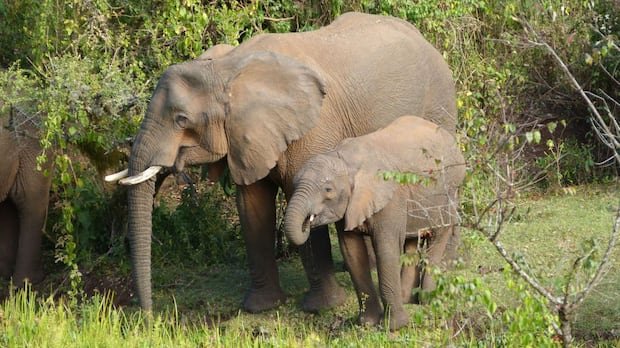

In an interview with researcher Elodie Freymann, fascinating accounts emerge of African elephants in Kenya’s Mount Elgon region utilizing medicinal plants. The stories, gathered from local wildlife scouts and community members, depict sickly elephants chewing on tree bark used in traditional medicine, and mother elephants incorporating medicinal plants into their young’s diet.
Freymann, who delves into self-medication in the animal kingdom, expressed little surprise at the discoveries, highlighting the intelligence and complexity of elephant behavior. A recent study co-authored by Freymann, published in the journal Nature, documents numerous medicinal plants identified by Mount Elgon elephants, emphasizing the importance of protecting the biodiversity crucial to these creatures.
Based on insights from Sabaot community members with extensive experience observing elephants, the research pinpoints specific plant consumption patterns linked to potential health benefits. While the study acknowledges the traditional medicinal use of most mentioned plants, it stresses the necessity for further investigation to confirm the elephants’ deliberate self-medication.
Notably, the study has garnered attention from elephant ecologist Chase LaDue, emphasizing the need for caution in interpreting anecdotal evidence. LaDue underscores the importance of empirical health data and cautions against assuming medicinal intent based solely on observed plant consumption.
Despite these cautionary notes, Freymann remains optimistic about the study’s implications. She plans to analyze footage captured by equipped community members to delve deeper into the elephants’ plant consumption behaviors, viewing this as a pivotal step towards unraveling the complexities of elephant self-medication.
If substantiated, the elephants’ self-medication practices would align them with other animals exhibiting similar behaviors, underscoring the significance of biodiversity conservation. Freymann stresses the critical role of preserving diverse habitats not only for sustenance but also for the medicinal resources vital to animal well-being amidst changing environmental landscapes.