

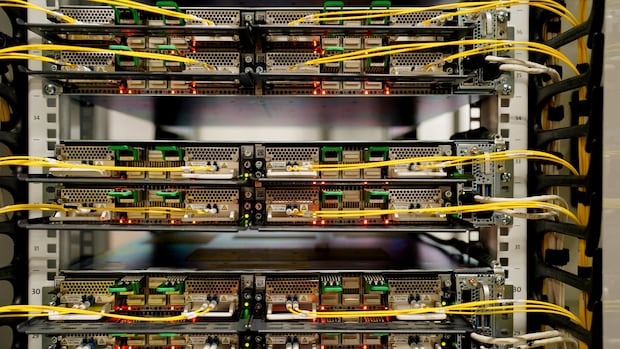

The latest budget from Ottawa aims to assist Canadian AI firms in securing processing power domestically, addressing a significant hurdle faced by smaller startups competing against larger tech corporations for limited computing resources.
The federal administration is set to provide 500 megawatts of “sovereign AI compute” to bolster local computing capabilities by utilizing financial mechanisms such as backstops and offtake agreements to promote private sector investment. However, uncertainties linger regarding the timeline for availability and the means by which companies will gain access to this capacity.
For Al Vigier, the CEO of Vancouver-based AI firm Caseway, obtaining computing resources in Canada is essential for meeting the needs of his clients.
Caseway specializes in AI and automation solutions primarily for the judicial system while also collaborating with law firms and the defense industry. A significant number of its clients require that their data remains within Canadian borders.
“The majority of our clients, including courts, defense, and the Canadian military, necessitate sovereign AI, meaning they prefer their data to stay in Canada. They wish for it to be regulated by Canadian law and to engage with Canadian firms,” he stated.
However, Vigier noted, this option is currently unavailable in Canada, leading some of Caseway’s customers to not utilize the company’s AI solutions. For other clients who have more leeway regarding data storage, Caseway must seek computing power from the U.S. or other locations.
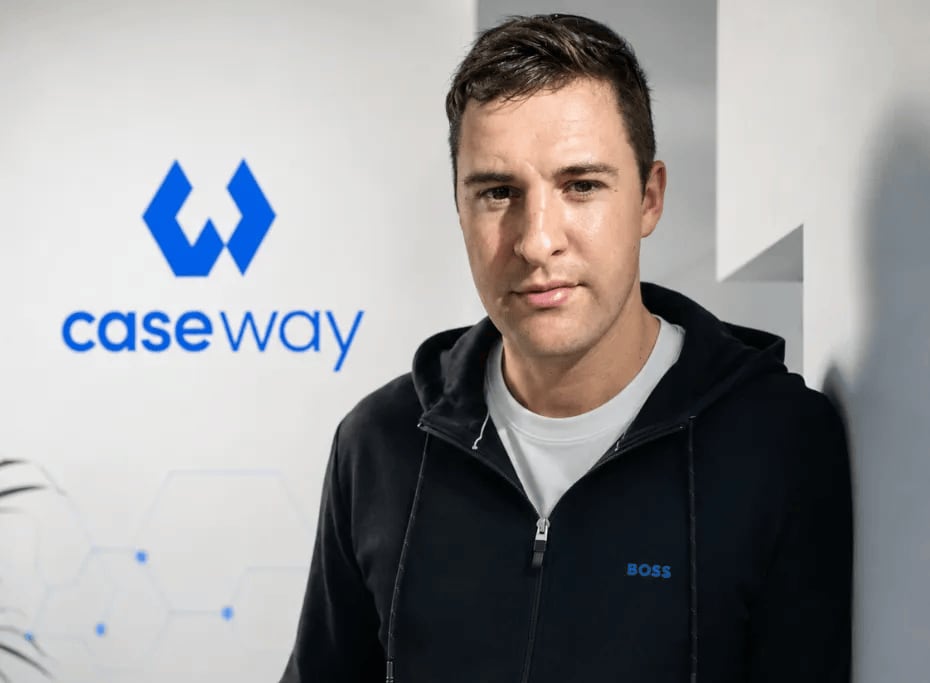
Al Vigier is the CEO of Caseway, a Vancouver-based AI company that builds automation for enterprises and government. (Submitted by Al Vigier)
Canada, similar to many other nations, is heavily dependent on American technology firms for cloud services, including remote computing and data storage provided by industry leaders like Amazon and Microsoft.
This reliance raises issues concerning data sovereignty, as U.S. laws may grant American intelligence and law enforcement access to data held by tech companies under specific conditions.
Vigier expressed enthusiasm about the federal government’s pledge, as it may help alleviate these worries. Nevertheless, while he is eager to provide sovereign computing services to clients right away, he is concerned about the implementation of the policy and the timeline for when the capacity will be accessible.
High Demand for Canadian Computing Power
Sean Mullin, a senior fellow at the Munk School of Global Affairs and Public Policy at the University of Toronto, who contributed to the launch of Canada’s sovereign AI compute strategy, mentioned that major technology firms like Meta, Google, and OpenAI are “desperate for compute.”
As AI models grow more sophisticated and their usage increases, he noted that “the demand just skyrockets.”
For Canadian startups aiming to leverage AI on a broader scale, “it can be difficult to secure these contracts because these large hyperscalers can swoop in and purchase all the use for five to ten years ahead,” Mullin explained.
“And if you’re a project developer for a data center, you’d think, ‘Oh, it’s very convenient. I’ll just sign one agreement with a huge company and I’ve sold all my compute. I don’t have to worry about smaller contracts or selling to less prominent Canadian firms.’
The scale of investments from significant technology companies is already visible in Canada.
Earlier this year, Meta unveiled plans to construct its first Canadian data centre, a massive one-gigawatt initiative northeast of Edmonton. Upon completion, it is anticipated to be one of the largest data centres in the country and the first hyperscale data centre in Alberta.
In October, the U.S. AI firm Anthropic announced that it had secured a long-term lease for the initial 95-megawatt phase of a data centre project in Nova Scotia. Canadian clean energy company EverWind Fuels will construct and own the facility, while Anthropic will lease the capacity for a minimum of 20 years.

Telus will build a new AI data centre in B.C., under the federal Enabling Large-Scale Sovereign AI Data Centres initiative, Minister of Artificial Intelligence and Digital Innovation Evan Solomon announced on Monday. The project ‘reflects the kind of ambitious infrastructure that we need as a country,’ Solomon said.
Increasing Efforts for Sovereign AI
Innovation, Science and Economic Development Canada (ISED) reports that it is striving to bring the capacity online “as quickly as possible,” yet has not disclosed a precise timeline.
“The government is in discussions with several proponents regarding potential projects across Canada that could significantly enhance domestic AI compute capacity,” a spokesperson stated in an email to CBC News. “These projects are at various stages of development, and commercial negotiations are underway, making it premature to confirm specific timelines, projects, or locations.”
ISED indicated that pricing and access agreements have yet to be established, although the government anticipates that companies utilizing the capacity will pay market rates.
This commitment is part of a wider federal strategy aimed at promoting sovereign AI. In October, Ottawa also revealed it would invest up to $1.6 billion in the Toronto-based AI firm Cohere.

500 Megawatts May Be Insufficient
Clay Swerdelian, CEO of Calgary’s Verano.AI, expressed a desire to keep his company’s computing operations within Canada, provided the cost is reasonable.
Verano.AI mainly serves the energy sector, employing AI-driven tools to facilitate work related to regulatory issues.
Swerdelian mentioned that the company has created its own AI agents and models to manage tasks involving sensitive information, including enterprise data and methane emissions data that clients would prefer not to share with external AI services.

Clay Swerdelian is the CEO of Verano.AI based in Calgary which primarily supports the energy sector with AI-powered automation of workflow on regulatory matters. (Submitted by Clay Swerdelian)
Swerdelian anticipates that Canada will witness a “massive boom” in the demand for computing power, partly fueled by the recent results of the U.S. midterm elections.
“Many red states have turned blue, and numerous blue states are now prohibiting data centers, leading to a shift towards Canada,” he noted.
“Overall, Alberta is the prime location due to its gas resources, available land, and existing infrastructure, aside from the data centers themselves.”
Considering the increasing demand, Swerdelian believes that the proposed 500 megawatts of computing capacity from Ottawa could be merely a “drop in the bucket.”
With no definite timeline for when this capacity will be made available, Mullin remarked that Canadian startups may have little choice but to rely on computing services from outside the nation.
“These companies might have to purchase compute back from hyperscalers, which in many cases could be sourced from south of the border, making us more vulnerable as a nation,” he said.
“This implies that all that data is crossing international boundaries under U.S. law. It indicates a lack of control over these assets, which could be seized or repurposed, ultimately increasing our dependency.”