

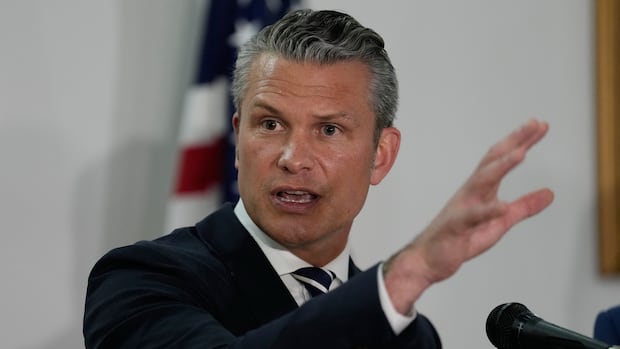

Reports indicate that U.S. Secretary of War Pete Hegseth has issued a confidential order that limits military collaboration between the United States and Canada, a development that has caught Canadian government and military officials by surprise, as they have not received any evidence of its implementation.
On Friday, the Washington Post revealed that this directive was distributed last week through a secret memorandum, citing U.S. officials who are knowledgeable about the matter.
Three Canadian defense officials who spoke on the condition of anonymity on Saturday acknowledged awareness of the reports and expressed their intent to verify the information while also seeking clarification, given that there have been no modifications at the operational military level between the two nations.
During remarks to Reuters at the Halifax International Security Forum, which features a significant U.S. congressional delegation, Defence Minister David McGuinty stated that Canada and the U.S. continue to collaborate closely on various missions, including combating illegal drug trafficking in the Caribbean and pursuing new policy initiatives like integrated air and missile defense.
“I see no divergence between our military engagements and other activities,” McGuinty commented to Reuters.
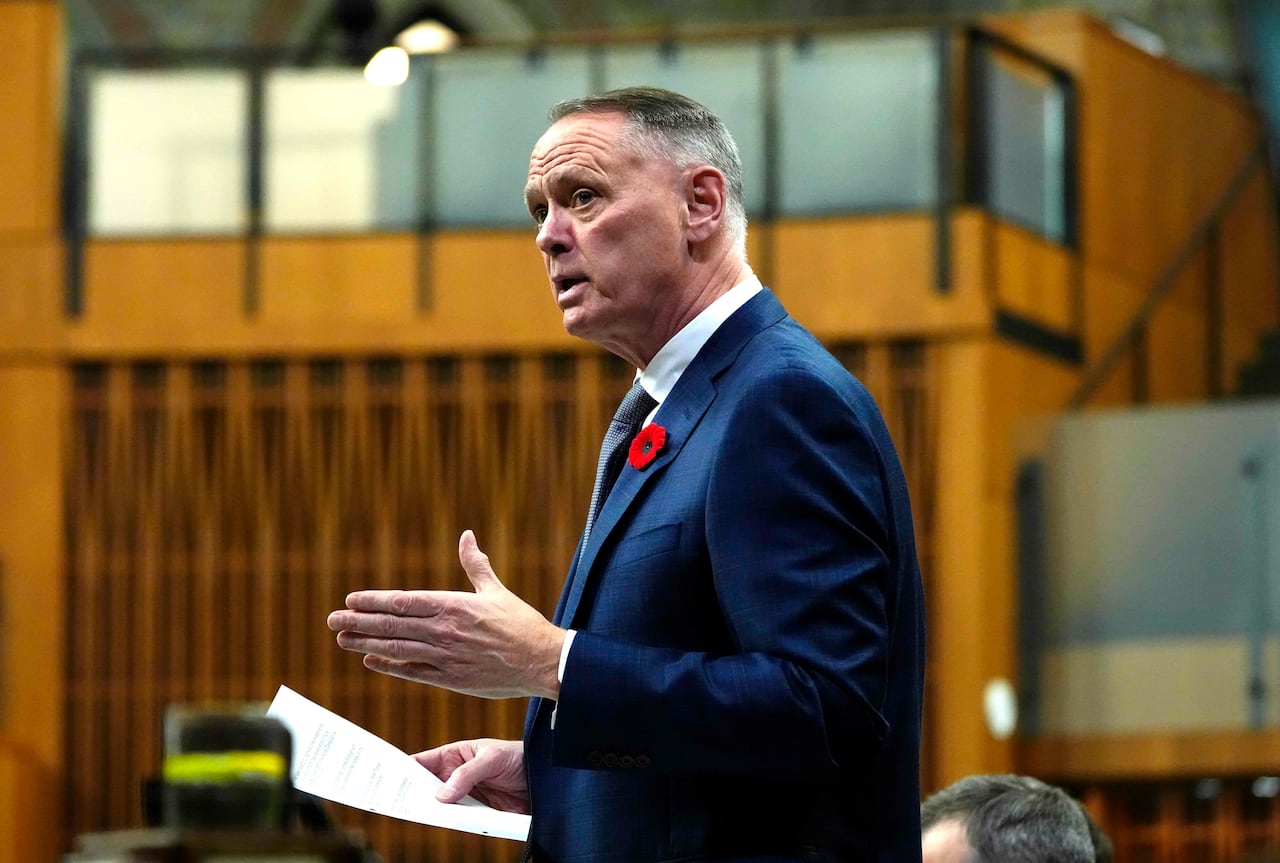
Minister of National Defence David McGuinty rises during question period in the House of Commons on Parliament Hill in Ottawa on Nov. 3. McGuinty says Canada and the U.S. continue to work ‘hand-in-glove’ on various military missions and new policy initiatives. (Justin Tang/The Canadian Press)
Later on Saturday in Halifax, McGuinty is anticipated to meet with the bipartisan U.S. congressional delegation, during which the report is likely to be addressed.
According to two anonymous defense sources, there was no discussion regarding the directive at the security forum dinner on Friday night, and one source questioned whether the congressional members were even aware of it.
CBC News has chosen not to disclose the identities of the sources as they were not permitted to speak publicly.
The presence of such a directive could exacerbate existing tensions between the two long-time allies concerning trade and defense expenditures.
Canada, U.S. pursuing trade agreement
This development occurs as the Trump administration and Prime Minister Mark Carney’s government are inching closer to a trade agreement that may provide relief in critical sectors such as automotive, steel, and aluminum.
The defense and military connections between Canada and the U.S. are extensive, longstanding, and would pose significant challenges to restrict at an operational level without jeopardizing U.S. security in some manner, according to one source.
The two nations work together in defending North America through NORAD and are founding members of NATO in Europe, collaborating alongside the other 30 nations in the Western alliance. They also engage in joint military exercises in the Indo-Pacific region.
A third source noted that it would also be counterproductive for Washington to limit access to U.S.-manufactured weapons systems and equipment, which it has been keen to sell to Canada.
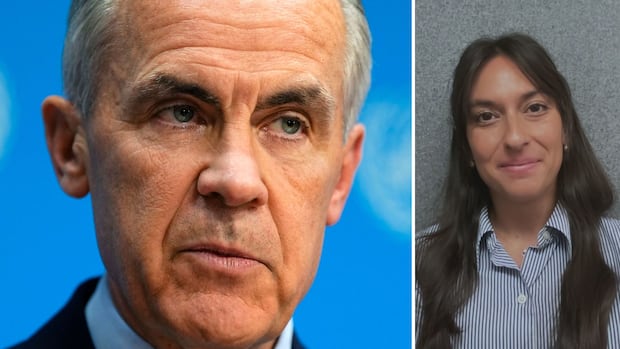
Prime Minister Mark Carney stated in an interview with the New York Times that he has analyzed the risk of a U.S. military strike on Canada. Matina Stevis-Gridneff, the paper’s Canada bureau chief, reported that Carney paused for several seconds — a notable silence — before answering whether such a scenario had crossed his mind.
The extent of Hegseth’s limitations remains unclear, as noted in the Washington Post report. Due to the classified nature of the memo, the Department of War has not disclosed which military programs or activities may be impacted.
In a statement to CBC News, which was also disseminated to other media outlets, Sean Parnell, the Pentagon’s chief spokesperson, dismissed the idea of restrictions on operational matters but was vague regarding the specific implications of the memorandum.
“The Department of War is taking measures to ensure that its engagements with Canada further tangible U.S. defense objectives and reinforce a revitalized defense relationship,” Parnell stated in a written response.
-
Trump says he’s working on a ‘fair’ trade deal with Canada
-
U.S. senator says Canada should make interim tariff agreement, let Congress ‘legislate’ long-term deal
“The Department of War is emphasizing opportunities for bilateral cooperation that enhance the defense of our Homelands and shared hemisphere, while also supporting Canada’s ability to fulfill NATO obligations. This guidance does not affect defense intelligence cooperation, our binational NORAD command, or our collaboration through NATO.”
This statement raises questions regarding bilateral military training exercises, defense planning, training exchanges, and other cooperative efforts.
However, Canadian officials assert that they have not yet observed any signs of restrictions and highlight that the memo has been circulating for a week.
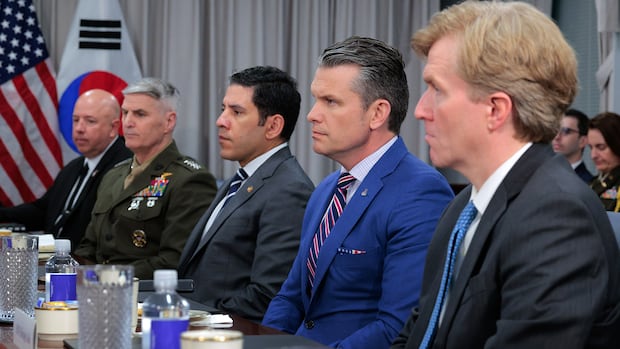
The Pentagon has announced it has paused its participation in a joint Canada-U.S. defence board that’s been around since the 1940s, accusing Canada of not making enough progress on its commitments. Canada says it’s always ready for constructive discussion on how to strengthen mutual security.
Last spring, the Trump administration suspended U.S. involvement in the Permanent Joint Board on Defence (PJBD) with Canada.
The cessation of the activities of this long-standing advisory board, which coordinates continental security and advises both governments on defense policy, was largely seen as symbolic given its infrequent meetings.
Canada has faced consistent criticism in Washington regarding its inadequate defense spending.
Under Carney’s leadership, there has been progress, and Canada has now achieved the NATO target of allocating two percent of GDP to defense.
However, Carney has publicly expressed his desire to diversify both the nation’s trade partnerships and sources for military equipment, stating that it is not beneficial for over 70 cents of defense spending to be directed to a single market — the United States.