

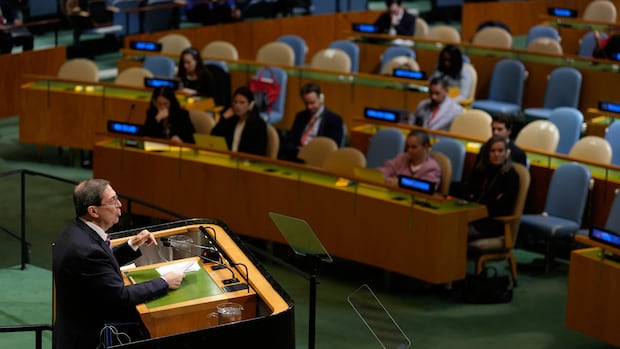

On Wednesday, the United Nations General Assembly strongly called for an end to the long-standing U.S. economic embargo on Cuba. However, a lobbying effort by the U.S. resulted in several nations opposing the resolution or choosing to abstain for the first time in several years.
The outcome revealed that 130 countries, including Canada, supported the resolution, while 25 abstained and 17 nations, including the U.S. and Israel, voted against it. This contrasts with last year’s vote, which saw a tally of 165 in favor, 7 against, and 12 abstentions. For the first time in many years, several Western nations, such as Germany and Italy, also abstained.
While the UN vote holds political significance, only the U.S. Congress has the authority to lift the embargo that dates back to the Cold War. The 193-member UN General Assembly has passed this resolution annually for over 30 years, with the exception of 2020 during the COVID-19 pandemic, but it has had minimal impact.
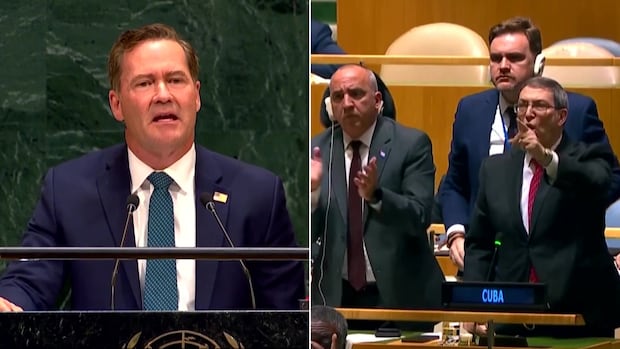
A heated confrontation occurred at the UN General Assembly after U.S. Ambassador Mike Waltz took the floor to oppose a resolution denouncing the long-standing U.S. economic embargo against Cuba. Members of the Cuban delegation, including Foreign Minister Bruno Rodríguez Parrilla, reacted by banging on their tables and demanding a point of order, followed by Rodríguez Parrilla confronting Waltz directly.
“I am pleased that so many nations, including significant economies like Korea and Germany, have changed their stance,” U.S. envoy to the UN Mike Waltz stated to the press following the vote.
“Diplomacy requires patience, but with the increase in countries shifting their positions, we anticipate this trend will continue.”
Tensions on display
Experts at the United Nations have consistently labeled the U.S. fuel blockade and its related sanctions against Cuba as violations of international law and infringements on the human rights of Cubans.
U.S. officials argue that these sanctions are essential to destabilize Cuba’s communist government, which they describe as a “corrupt dictatorship.”
Cuba has persistently rejected these claims.
Tensions between the two nations at the UN heightened in the lead-up to the vote, marked by shouting matches between Cuban and U.S. diplomats last week, as well as heated exchanges during the General Assembly session on Tuesday.
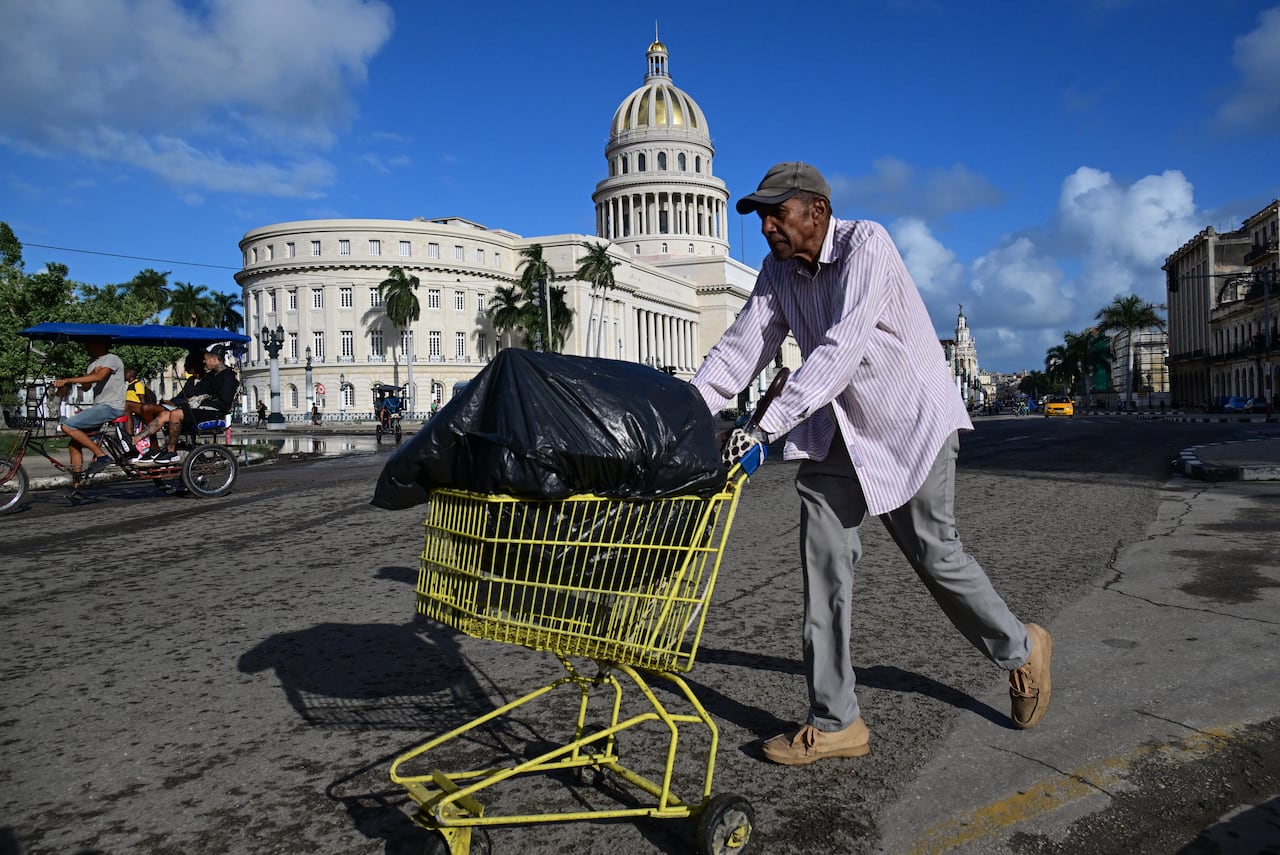
A man pushes a shopping cart filled with recyclable materials in front of the Capitol building in Havana on Monday. (Yamil Lage/AFP/Getty Images)
Luis Manuel Cepero, a resident of Havana, expressed little concern for the political drama unfolding at the UN.
“This [vote] serves to inform many people who don’t fully grasp the implications of the [embargo] — how it impacts daily life for Cubans, what we endure, and our suffering,” Cepero told Reuters.
“For me, that is what truly matters — far beyond political perspectives or ideologies.”
U.S. expels Cuban diplomat
On Wednesday, Waltz accused a Cuban diplomat of “assaulting an American diplomat” during the exchanges on Tuesday, stating that Richard Tur de la Concepción, a first secretary at Cuba’s UN mission, would be expelled from the United States.
“That Cuban first secretary will be on a flight back to Havana today,” Waltz informed reporters at the UN.
In retaliation, Cuba has filed a complaint with UN Secretary General António Guterres regarding the American diplomat from Waltz’s team involved in the incident.
A spokesperson for the U.S. State Department confirmed via email to CBC News on Wednesday evening that the diplomat set for expulsion “has departed.”
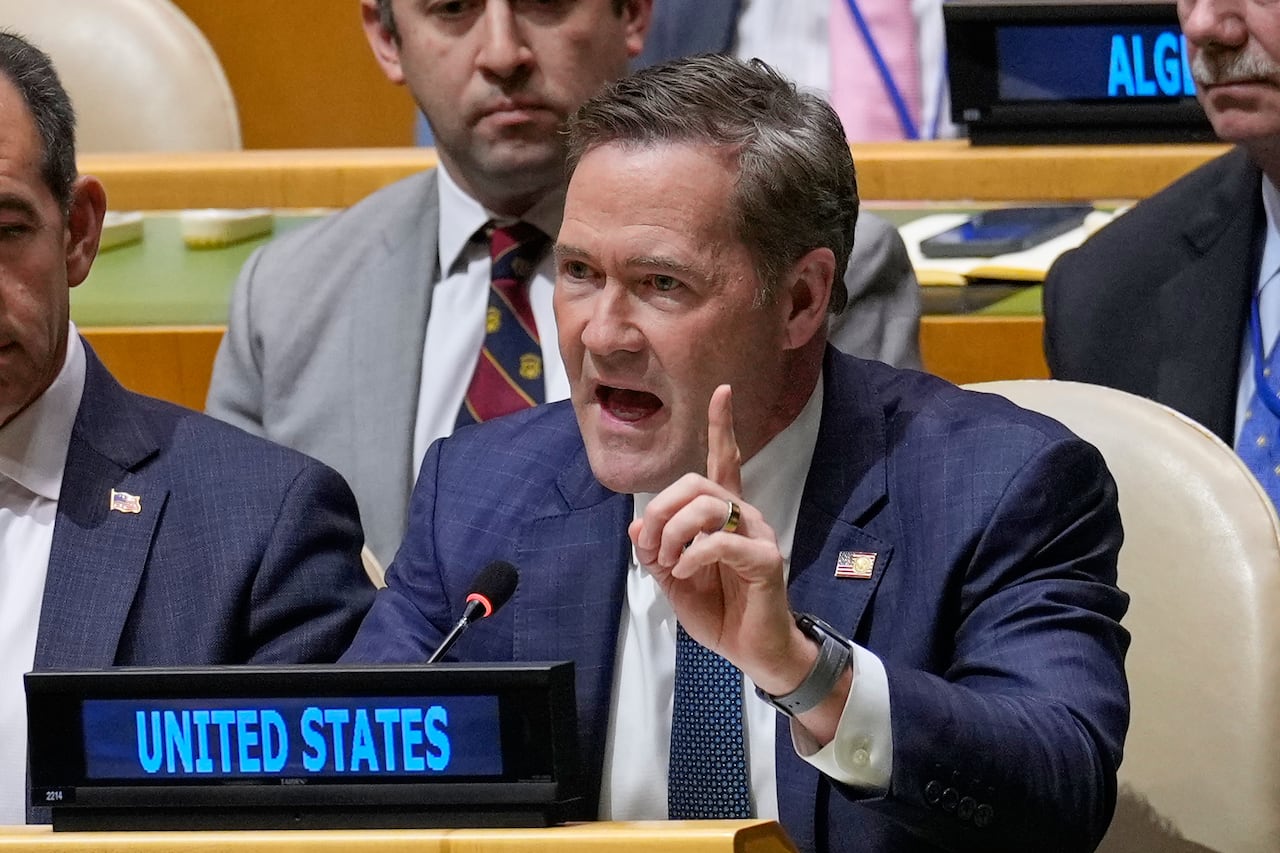
U.S. Ambassador to the UN Mike Waltz announces the expulsion of a Cuban diplomat from the United States. (Seth Wenig/The Associated Press)
The U.S. has upheld a trade embargo against Cuba for over 60 years, and the administration of former President Donald Trump intensified this pressure after deploying the U.S. military in January to remove Venezuelan president Nicolás Maduro.
Fuel imports have sharply declined, leading to extended blackouts even in the capital, Havana, alongside shortages of fuel, food, and water, pushing Cuba towards a humanitarian crisis.
After the vote, Cuban Foreign Minister Bruno Rodríguez Parrilla stated on X that the “U.S. government is once again isolated in its attempts to continue suffocating the Cuban people and subjecting them to a form of collective punishment and genocide.”
“Neither its most outrageous justifications nor its pressures or media spectacles will triumph over the force of facts and truth,” he added.
The United States has opposed the UN resolutions since 1992 but abstained for the first time in 2016 under former President Barack Obama, when Washington and Havana began to improve relations.