

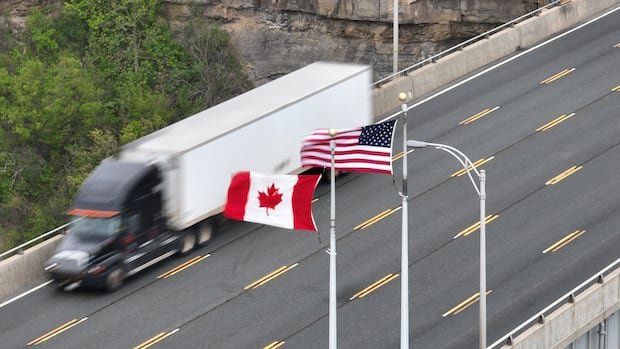

A new analysis warns that if the Canada-U.S.-Mexico Agreement fails, it could result in significant job losses and economic repercussions on both sides of the border. The report, commissioned by the Canadian American Business Council and conducted by Oxford Economics, examined various scenarios of the current trade negotiations between the U.S. and Canada.
In the event of the agreement collapsing, an estimated 214,000 American and 102,000 Canadian jobs would be at risk compared to the status quo. Conversely, successful renegotiation of the agreement could lead to job gains of 137,000 in the U.S. and 98,000 in Canada.
The CEO of the Canadian American Business Council emphasized the importance of the trading relationship between the two countries, stressing the significance of maintaining a strong economic partnership. The potential consequences extend beyond employment figures, with the breakdown scenario forecasted to cost the U.S. economy $1.04 trillion and Canada $271 billion by 2035. Inflation rates would likely rise, and real disposable income growth could be hampered if the agreement fails.
The report also highlighted the sectors that would be most affected, with manufacturing industries in both countries facing challenges in case of a breakdown. Talks between trade representatives continue as the deadline for new tariffs approaches, with efforts to reach a deal before the looming tariff deadline intensifying. Negotiators are aiming to present a potential trade deal to President Donald Trump for consideration.
The ongoing discussions underscore the necessity for concessions from both sides to secure a favorable agreement. Failure to reach a deal could have severe repercussions on various manufacturing sectors in central Canada and the U.S., according to recent economic forecasts.