

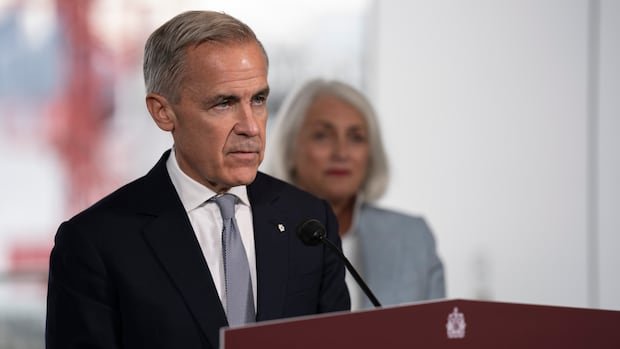

Prime Minister Mark Carney unveiled a federal investment of $1.2 billion for safeguarding the oceans on Tuesday, coinciding with forthcoming decisions on a new pipeline to the West Coast and the extension of a key port in Metro Vancouver. Carney emphasized the potential repercussions of these major projects, anticipating heightened maritime activity that could strain the habitats under conservation efforts.
The allocated funds will support various initiatives, including enhancing the Canadian Coast Guard’s monitoring capabilities for marine traffic, establishing a national near-shore weather forecasting system, and formulating a plan for responding to oil spills affecting marine mammals. Additionally, the funding will facilitate upgrades to search and rescue facilities, advancements in seabed mapping, and initiatives for conserving fisheries.
Carney’s announcement in North Vancouver preceded a looming deadline for Ottawa to determine the national interest status of a proposed pipeline connecting Alberta to British Columbia’s southern coastline. He highlighted the economic benefits of this project, projecting the creation of nearly 150,000 jobs nationwide and a reduced reliance on the United States. Emphasizing a cautious approach, Carney affirmed the government’s commitment to balancing economic growth with environmental protection in its investment strategies.
Moreover, Carney assured that the proposed pipeline route would avoid environmentally sensitive regions, resembling the existing Trans Mountain pipeline path, while upholding the ban on tanker traffic along British Columbia’s northern coast. The upcoming referendum in Alberta on separation from Canada and the approval of LNG Canada’s Phase 2 expansion in Kitimat, B.C., underscore the evolving landscape of energy and infrastructure development in the region.
Notably, Carney has previously advocated for expanding the Port of Vancouver’s Roberts Bank terminal to diversify export markets and bolster national sovereignty. The impending expansion aims to alleviate the port’s existing capacity constraints, enabling increased trade with international partners. As maritime activities intensify at the port, Carney stressed the importance of fortifying measures to protect marine ecosystems and the endangered southern resident killer whales inhabiting the southern coast of British Columbia.
Furthermore, initiatives to mitigate underwater noise impacting marine life, particularly whales, are underway, with a focus on maintaining noise levels at those of 2023 despite rising vessel traffic. Notably, stringent conditions will govern construction activities, ensuring immediate halts if marine life, such as killer whales, approaches the project site. Funding will also support Indigenous-led stewardship and restoration efforts in the Lower Fraser River Estuary, as well as bolster front-line fisheries enforcement through the provision of modernized tools, including drones.
The funding package also includes provisions for the Northern Shelf Bioregion Reconciliation Framework Agreement, aimed at enhancing collaborative governance, conservation efforts, emergency readiness, and cumulative effects management in the Great Bear Sea region. The announcement has garnered positive responses from Coastal First Nations and concerns from advocacy groups, emphasizing the need for responsible shipping practices amidst increasing economic development.