

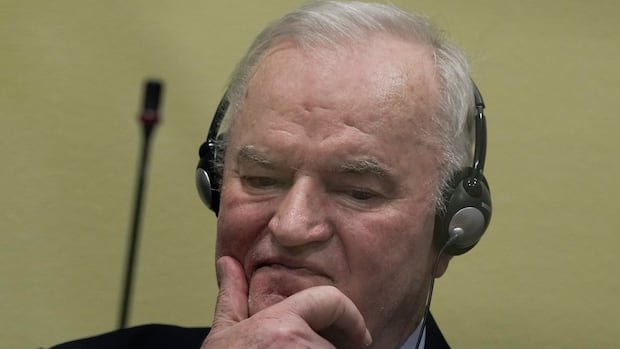

Ratko Mladic, the individual found guilty of genocide for masterminding the 1995 mass killing of over 8,000 Muslims in what is considered Europe’s worst atrocity since World War II, has passed away. Mladic’s lawyer, Dragan Ivetic, confirmed his death while in UN custody, with the exact cause remaining undisclosed. The former general spent his final months in a hospital ward within a UN detention center located in a suburb of The Hague.
The massacre in Srebrenica marked the brutal conclusion of a conflict that spanned more than three years, during which Mladic relentlessly bombarded the besieged capital Sarajevo with artillery, tanks, mortars, and heavy gunfire, resulting in the deaths of 10,000 individuals. The victims from Srebrenica were buried in mass graves over a four-day period in July 1995, with some remains later relocated to remote areas to conceal evidence of the atrocities.
The United Nations International Criminal Tribunal for the former Yugoslavia (ICTY) determined that the objective was “ethnic cleansing,” involving the forced expulsion of Bosnian Muslims, Croats, and other non-Serbs to create a Greater Serbia. Mladic, along with Serbian President Slobodan Milosevic and Bosnian Serb political leader Radovan Karadzic, were identified by the tribunal as part of a criminal enterprise to carry out this plan.
Despite being labeled the “Butcher of Bosnia” by his adversaries, Mladic expressed defiance towards the ICTY during his 2014 hearing and vehemently rejected the court’s authority. Upon receiving a life sentence in 2017, he vehemently proclaimed his innocence.
Mladic, along with Karadzic, who was also convicted of genocide in 2016, remained at the top of the ICTY’s most-wanted list for an extensive period following the conclusion of the conflict by Western powers. Milosevic’s detainment in 2000 marked a turning point, leading to Mladic residing discreetly in Belgrade until then.
Mladic’s military tactics during the Bosnian conflict were characterized by extreme brutality, including instances where prisoners endured inhumane treatment such as being deprived of food and water, subjected to sexual violence, and executed. Survivors, like Munira Subasic, portrayed Mladic as a symbol of the war’s atrocities, recounting personal losses suffered at the hands of Bosnian Serb forces.
Mladic’s capture in 2011 was uneventful, as he displayed no resistance. His declining health, coupled with ongoing legal battles, culminated in his appeal for release on compassionate grounds being denied in 2021.