

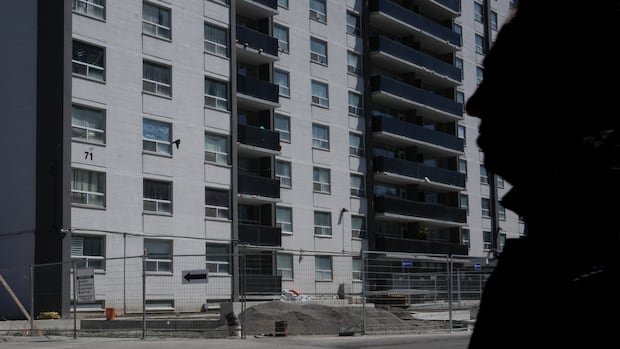

Buying a property is a significant financial decision for many Canadians, representing a major investment. When considering the financial aspect alone, the question arises: Is it more advantageous to make a substantial down payment, leading to higher monthly expenses as a homeowner, or to continue renting and invest the savings elsewhere? Which option ultimately leaves individuals with more money in their pockets?
To address this query, an analysis was conducted using over two decades of historical data on property prices, rents, inflation, and interest rates in 22 Canadian metropolitan areas, in addition to long-term stock market returns. This information was utilized to develop an interactive simulator. Each simulation calculates the monthly expenses and financial gains for three distinct scenarios: a homeowner with a fixed-rate mortgage, one with a variable-rate mortgage, and a renter. In cases where the renter’s monthly costs are lower than the homeowner’s, the saved funds are automatically invested in stocks and bonds to grow over time.
The simulator projects these financial trajectories over a 25-year period across 1,000 unique scenarios, encompassing various economic conditions such as high rents and low interest rates or average inflation coupled with subdued stock market returns. The calculations take into account mortgage payments, insurance, property taxes, maintenance costs, condo fees, rent, and eventual selling fees, offering potential future outcomes based on historical trends and selected options.
It is important to note that while this tool provides probabilities, it does not offer guarantees and should not be the sole basis for significant financial decisions. A simplified version of the simulator is presented below, with a more detailed and comprehensive version available for further exploration at the end of this article.
In recent years, there has been a decline in home prices while interest rates, average property taxes, and maintenance expenses have risen. Concurrently, the stock market has experienced significant growth. Notably, an investment made in 2005 would have appreciated approximately seven times more today compared to a property purchased during the same period, which has seen a threefold increase.
Analysis of these trends reveals a clear pattern: Opting to rent an average studio or one-bedroom apartment and actively investing the saved funds instead of owning a condo presents a strong opportunity for financial advancement. However, transitioning to a two-bedroom apartment or larger can quickly alter this equation, as higher rent prices often consume any surplus, making meaningful savings and investments challenging.
In many scenarios, the monthly cost of renting eventually surpasses the cost of homeownership. While a homeowner’s largest monthly expense typically lies in their mortgage, which tends to decrease in real value over time when adjusted for inflation, rent expenses tend to rise consistently, often outpacing general inflation. Eventually, renters may find themselves paying more each month than homeowners, eroding their savings potential and hindering further investment contributions.
The decision between buying and renting is heavily influenced by location. In certain regions, owning a condo may result in the least financial loss after factoring in all cumulative expenses compared to renting a larger unit. While purchasing and selling a condo do not guarantee profits, single-family homes or townhouses offer higher chances of financial returns, albeit with higher initial purchase costs.
For a significant portion of Canadians, particularly those in urban centers, renting may be the only feasible option due to affordability constraints. The inability to afford an average condo in their city is a reality for half of all couples analyzed, with this figure increasing to two-thirds for houses.
As Aled ab Iorwerth, deputy chief economist at the Canada Mortgage and Housing Corporation (CMHC), noted, there are two housing crises in Canada: one concerning the middle class’s ability to afford properties in major cities, and another affecting low-income individuals who struggle to find suitable housing. This affordability challenge has led to younger generations delaying property ownership, resulting in potential long-term financial implications.
In conclusion, the decision to buy or rent a property involves various considerations beyond financial aspects. Experts emphasize the importance of introspection regarding how homeownership truly enhances one’s life and the need for more diverse education on alternative investment strategies. Additionally, the broader implications of moving to suburban areas, such as increased transportation costs, must also be factored into the decision-making process.
Ultimately, the debate between renting and buying is multifaceted, with no one-size-fits-all solution. Public policies and housing strategies must strike a balance between encouraging homeownership and ensuring affordable rental options to address the diverse housing needs of Canadians.