

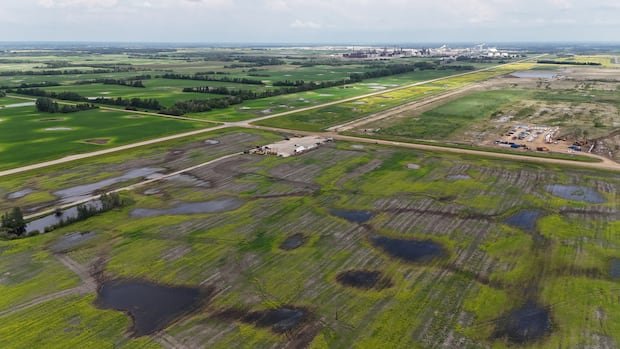

The electricity consumption of artificial intelligence data centers is widely recognized. However, there is uncertainty about whether this could lead to increased energy expenses for consumers in Alberta. According to a recent report from the Pembina Institute, the Meta Data Centre planned for Sturgeon County, Alta., one of the largest proposed data centers in the province, might impact household power bills by $270 to $460 annually once operational. David Pickup, the director of energy at the Pembina Institute, emphasized that such projects could have significant financial implications for consumers.
Data centers serve as physical facilities that house the necessary computing hardware for various tech applications utilizing AI. In 2023, data centers accounted for 4.4% of U.S. electricity demand, a figure that the U.S. Department of Energy predicts could potentially rise to 12% by 2028.
Meta Platforms Inc., the company behind Facebook and Instagram, announced plans to construct a $13 billion data center complex, set to be operational within the next two to three years. It is expected to be linked to the $4.6 billion Greenlight Electricity Centre, which will generate 932 megawatts of power initially, with the potential to double that capacity in the future. Despite assurances from the provincial government and Meta that the Edmonton-area data center will not increase electricity costs for Albertans, experts warn of possible price hikes due to the gap between the data center’s launch and the completion of its power plant.
The impact on electricity prices is expected to be most significant before the Greenlight plant becomes operational, as highlighted in the Pembina report. Kent Fellows, an economics associate professor at the University of Calgary, emphasized the potential influence of large-scale projects like Meta’s data center on electricity prices if additional generation capacity does not align with the increased demand.
The estimated electricity requirement for Meta’s operations is nearly one gigawatt, approximately 10% of Alberta’s current generating capacity, which could strain the supply cushion in the power grid. Experts suggest that without Meta’s own power plant, there could be an increase in wholesale electricity prices in the region.
Looking ahead, renewable energy sources, battery storage, and energy-saving technologies could help mitigate these challenges. Premier Danielle Smith assured that household electricity needs would be prioritized during supply shortages. The Alberta government’s active efforts to attract tech giants like Meta and Google could lead to a cumulative impact with the construction of more data centers in the province.
In conclusion, while Meta and the government emphasize that electricity costs will not be shifted to consumers, the potential effects of increased data center demand on energy prices remain a topic of concern. The introduction of responsible data center development principles by the federal government aims to ensure sustainable and transparent growth in the sector.