

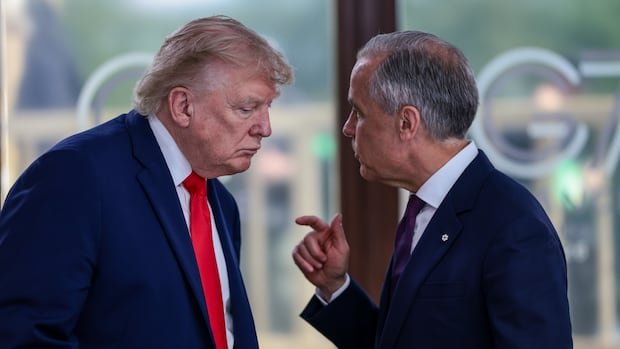

Canada is in active discussions with the United States to secure a trade agreement that will shield it from the impending tariff threat by U.S. President Donald Trump and potentially reduce existing tariffs in key sectors. Despite multiple rounds of negotiations between Canadian and American officials over the past three weeks, both countries are currently deadlocked as the deadline approaches.
Insiders have revealed that Canadian negotiators are increasingly concerned about the likelihood of facing 50% tariffs on numerous Canadian products due to Washington’s firm stance on its demands. Simultaneously, Ottawa is striving to persuade provinces to lift restrictions on American alcohol imports to seek relief on sectoral tariffs.
In the automobile sector, the U.S. is proposing to lower its current auto tariffs from 25% to 15%, with further reductions for Canadian-made vehicles by increasing U.S. content. However, Canada finds this offer insufficient, attributing the tariff threats to issues in the auto trade. Unifor’s national president Lana Payne emphasized the importance of securing a favorable deal without making excessive concessions.
Regarding dairy, Trump has long criticized Canada’s supply management system, particularly the restrictive tariff-rate quotas on U.S. dairy compared to the European Union. Negotiators anticipate that Canada may need to compromise on dairy in the trade deal, although this could pose political challenges for the Carney government due to the industry’s significance in Quebec.
In the alcohol sector, the federal government has instructed provinces to prepare for the resumption of U.S. alcohol sales if a tariff agreement is reached. However, differing stances among provinces on lifting bans present a significant obstacle in avoiding Trump’s tariffs. Premier Doug Ford of Ontario emphasized the need for a fair deal that addresses tariffs on crucial sectors before reinstating U.S. alcohol sales.
Canada is advocating for reduced tariffs on steel, aluminum, and copper imposed by the Trump administration, with various measures already implemented to support these industries. The government announced a $100 million program to subsidize transportation costs for Canadian-made steel, aiming to sustain the sector amid tariffs.
Efforts to seek relief on the U.S. tariffs on Canadian softwood lumber have not gained traction, as Washington prefers to address this issue separately. The impending 50% tariffs are expected to impact several lumber products, posing challenges for British Columbia’s lumber industry.
Additionally, negotiations involve discussions on preferential access to Canadian critical minerals, energy, and security matters. Canada’s significant mineral projects and the U.S.’s interest in critical minerals drive these discussions, with Trump’s recent $3 billion investment in critical minerals and battery projects highlighting the strategic importance of these resources.
The review of Canada’s F-35 fighter jet purchase from the U.S. is also part of the negotiations, initiated in response to diplomatic and trade tensions with the Trump administration. National Defence Minister David McGuinty expressed optimism about reaching a successful outcome in due course.