


Three major Canadian banks offered cautiously optimistic views on the economy on Thursday, in stark contrast to the concerns voiced by numerous small businesses grappling with the impact of an escalating trade war with the United States.
Royal Bank of Canada, Toronto-Dominion Bank, and CIBC unveiled their financial results prior to Thursday’s opening bell on the Toronto Stock Exchange. Combined, these banking giants hold assets totaling up to $6 trillion on their balance sheets. With extensive portfolios including mortgages, auto loans, and various debt products, along with widespread client networks across Canada and the U.S., these institutions have a unique perspective to monitor the effects of tariffs.
RBC CEO Dave McKay mentioned, “The Canadian economy has displayed resilience. The positive trends in employment and GDP during Q2 maintain a cautiously hopeful outlook for continued economic growth.” McKay also noted that although Canada and the U.S. have not reached a long-term resolution, the average effective tariff rate remains low at around six percent, with the majority of exports remaining duty-free.
Optimism in Investment Trends
TD Bank CEO Raymond Chun referred to a growing “super cycle” in investment in Canada driven by government spending in sectors like infrastructure and national defense. According to TD Economics, there are over $1 trillion in approved projects by Ottawa and the provinces scheduled through 2035 and beyond.
“Trade tensions have not hindered investment prospects in Canada, as governments aim to stimulate new activities,” Chun stated. He also added, “A historic investment super cycle could unfold across Canada in the next decade, positioning us well to benefit from these opportunities.”
CIBC CEO Harry Culham expressed a “measured confidence” for the latter half of 2026, stating, “The trade landscape will continue to evolve, and we are refraining from speculating on its outcome.” CIBC’s chief risk officer, Frank Guse, highlighted the bank’s close monitoring of Canada’s labor market for any signs of weakness.
A study by Oxford Economics for the Canadian American Business Council revealed that over 100,000 Canadian jobs could be at risk if the Canada-U.S.-Mexico Agreement (CUSMA) were terminated. BMO Capital Markets predicts that the latest U.S. tariffs will potentially reduce Canadian growth by half a percentage point, mainly due to diminished business confidence and investment.
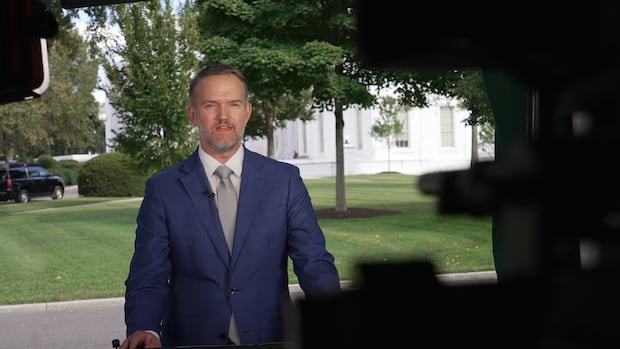
U.S. Trade Representative Jamieson Greer tells CBC chief political correspondent Rosemary Barton that Canada wanted ‘too much’ from the U.S. in trade negotiations. In the Canadian exclusive interview — the first one-on-one the Trump administration has done with Canadian media since the trade dispute entered this new phase — Greer denies the Canadian assertion that the U.S. added last-minute conditions to the Canada-U.S. draft deal that fell apart.
National Bank’s CEO Laurent Ferreira recently highlighted the resilience of Canada’s economy over the past 18 months. He commended Ottawa’s significant investment plans and the government’s aid initiatives to support workers and businesses affected by U.S. tariffs. Ferreira praised the federal government’s commitment to construct six icebreaker ships in Quebec as part of