

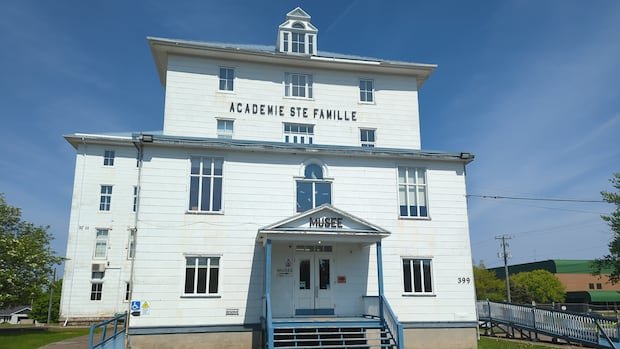

New Brunswick boasts over 100 museums and historical sites, with Tracadie in northeastern New Brunswick being home to the Musée Historique de Tracadie. This museum pays tribute to the Religieuses Hospitalières de Saint-Joseph, a group of nuns who played a vital role in the community’s past.
Initially, the nuns focused on running a lazaretto, a hospital for leprosy patients, after the disease was first identified in Tracadie in 1828. The museum’s director, Erika Basque, shared that the infection likely arrived via immigrants from Norway who were harboring the disease.
The lazaretto, which opened in 1849, evolved over the years to accommodate leprosy patients from across Canada. However, this caused a negative impact on Tracadie’s reputation, as the town was stigmatized due to the disease’s presence.
In 1943, a breakthrough occurred when Dr. Guy Henry Faget discovered that the drug promin could effectively treat leprosy. This discovery marked the closure of the lazaretto in 1965.
Beyond treating leprosy patients, the nuns also provided general healthcare services to the community. The lazaretto included a hospital that served as the region’s first French-speaking healthcare facility in 1896.
The museum showcases historical medical equipment, including old IV bottles and metal syringes, offering visitors a glimpse into the past practices of healthcare professionals.
The nuns also recognized the need for education in Tracadie and established day and boarding schools, attracting students not only from the local area but also from other parts of francophone New Brunswick and Quebec.
While the Religieuses Hospitalières de Saint-Joseph continues its work in various communities, their presence in Tracadie officially ended in 2025. The Musée Historique de Tracadie stands as a testament to their contributions to the region’s history.