


After nearly eight years of pursuing funding, the City of Kimberley has secured $400,000 for a study on the potential impact of wildfires on its drinking water supply. The initiative stems from the 2018 Meachen Creek fire, which highlighted concerns about the susceptibility of local water sources.
Mathieu Bourbonnais, an assistant professor at the University of British Columbia (UBC) Okanagan and co-director of the Centre for Wildfire Coexistence, emphasized the importance of understanding the reliance on the environment for drinking water. He noted that the changing nature of wildfire behavior is altering how water systems function.
Kimberley draws its drinking water from the Mark Creek and Matthew Creek watersheds. In the event of a severe wildfire, both the quality and availability of the city’s drinking water could be impacted long after the fire is extinguished. The project’s objective is to assess these risks and identify strategies to mitigate them without introducing new challenges to the water supply.
The recent Matthew Creek wildfire, which necessitated an evacuation alert for the entire city, underscored the immediate risks faced by Kimberley’s watersheds. Although wildland fire ecologist Bob Gray anticipates minimal impact on water movement in the watershed from the recent fire, concerns linger about the potential consequences of a more severe fire in one of Kimberley’s drinking-water watersheds.
Bourbonnais and his team at UBC Okanagan are collaborating with the city and Gray to simulate fire behavior in the Mark Creek watershed. The research will analyze forest conditions, weather patterns, and climate change forecasts up to 2060. Furthermore, the study will investigate the potential effects of a severe fire on water quality, streamflows, and the timing of water inflow into reservoirs.
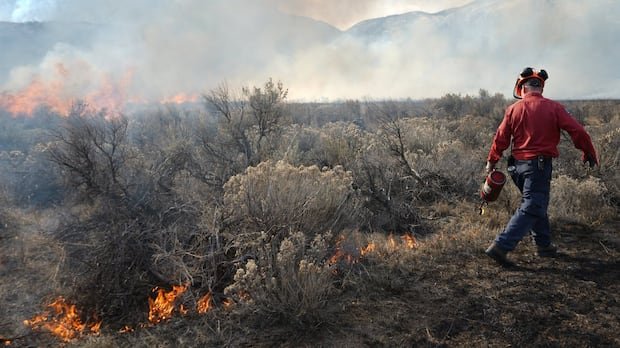
The research aims to identify areas where measures such as forest thinning, harvesting, and prescribed burning can reduce wildfire risks. However, Bourbonnais emphasized the necessity of balancing these mitigation efforts with their impacts on hydrology. The modeling will guide the implementation of mitigation measures to prevent exacerbating erosion, sedimentation, or peak water flows.
The project, with an anticipated duration of two years, is funded by the Columbia Basin Trust ($300,000) and the city of Kimberley ($100,000). The outcomes will inform future wildfire mitigation strategies and provide valuable planning resources that other communities can leverage. Bourbonnais stressed the importance of proactive action, stating that the risk of inaction outweighs the risks of being proactive.