

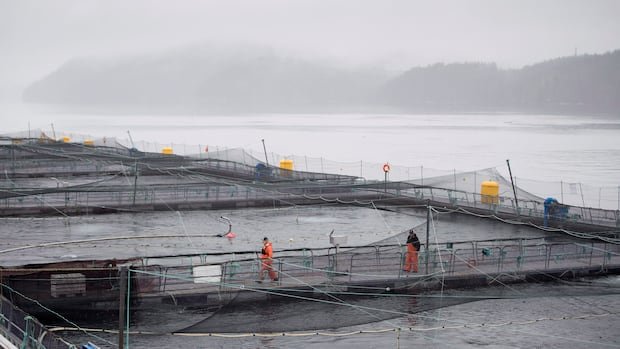

A recent study by the Pacific Salmon Foundation revealed a higher prevalence of viral heart disease, known as heart and skeletal muscle inflammation (HSMI), in open-net salmon farms in the Broughton Archipelago in British Columbia than previously acknowledged. The study detected HSMI in five out of seven salmon farms in the region, with the disease-causing virus, piscine orthoreovirus (PRV), posing a risk of spreading to wild fish in the surrounding waters.
Lead author Emiliano Di Cicco emphasized that the frequency of HSMI occurrence is significantly greater than previously assumed, challenging prior understandings. This finding raises concerns about disease transmission from farmed fish to wild salmon, a longstanding issue associated with open-net fish farms along the British Columbia coast.
Analysis of 749 salmon across the farms revealed that nearly seven percent exhibited signs of HSMI, indicating the widespread impact of the disease. While the pathogenicity of PRV was previously debated, recent studies have established its link to HSMI, prompting calls for its reclassification as a pathogenic virus by the Department of Fisheries and Oceans (DFO) in British Columbia.
Di Cicco urged for standardized diagnostic criteria for HSMI aligned with international standards, as the current criteria used by DFO may overlook cases of the chronic, low-level condition. The DFO responded that it will review the study findings and incorporate them into future assessments, emphasizing the collaborative development of diagnostic criteria with scientific experts.
The study’s collaboration with the Mamalilikulla, ʼNa̱mǥis, and Ḵwiḵwa̱sut’inux̱w Ha̱xwa’mis First Nations highlights the Indigenous communities’ concerns about the impact of open-net pen salmon farms on marine ecosystems. Indigenous leaders, including Rick Johnson and Don Svanik, stressed the cultural significance of salmon and the need to prioritize their protection in light of scientific evidence confirming existing concerns about aquaculture practices.