

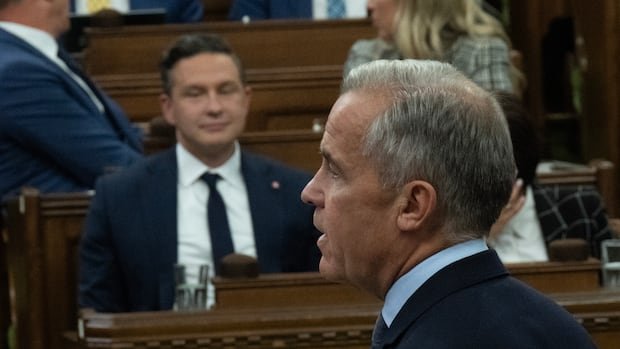

Conservatives are urging the Liberals to disclose the contents of the U.S. tariff deal that was declined by the federal government last week. While some believe transparency could foster national unity, others argue it may weaken Canada’s negotiation stance.
Following unsuccessful trade talks, U.S. President Donald Trump imposed 50% tariffs on numerous Canadian products. Prime Minister Mark Carney stated that the U.S. demanded too much without offering adequate concessions for a final agreement.
Conservative MPs are pressing for full disclosure of the rejected deal details. Conservative Leader Pierre Poilievre emphasized the importance of Canadians knowing the terms initially considered by the government.
Bloc Québécois Leader Yves-François Blanchet expressed openness to the government releasing the information. However, trade lawyer Lawrence Herman cautioned against divulging such sensitive negotiation specifics, as it could compromise Canada’s future bargaining leverage.
Carlo Dade from the University of Calgary highlighted the significance of transparency, noting that the U.S.’ requests align with global trade trends. Finance Minister François-Philippe Champagne defended the government’s transparency, citing extensive media coverage of the negotiations.
Poilievre argued that the U.S. negotiators likely had insight into Canada’s offers. Former Alberta premier Jason Kenney emphasized the complexity of trade negotiations and the need for confidentiality.
Dade recommended transparency to prevent provincial discord under U.S. tariffs, emphasizing the importance of Canada’s unique circumstances under the Canada-U.S.-Mexico Agreement.
In light of potential sectional tariffs, Dade stressed the necessity of clarity to maintain national unity and prevent divisions among provinces. He urged the government to disclose the terms to prevent uncertainty and promote solidarity across Canada.