

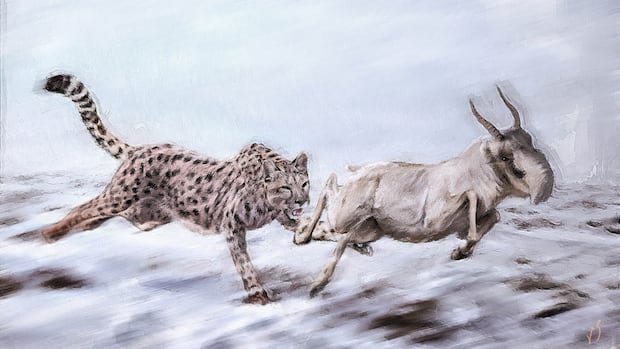

In the Bluefish Caves and a mine site in northern Yukon, bones initially believed to be from an ice-age puma or cougar turned out to be something else, according to DNA analysis conducted by the University of California. Molly Cassatt-Johnstone, a lab technician at the time, made this discovery while working on some of her first samples. The bones were identified as belonging to the extinct American cheetah, known as Yukon Miracinonyx.
Grant Zazula, a Yukon paleontologist, was surprised to learn that the bones were not from cougars but from cheetahs. The advancement in genetic analysis techniques has made it possible to study permafrost-preserved bones from the Yukon, which was once considered science fiction but is now a common practice.
The study published in Current Biology, led by Cassatt-Johnstone, sheds new light on the diet and habitat of the ice-age cat. Contrary to previous beliefs, researchers found that the American cheetah, with its physical resemblance to modern cheetahs, survived in the Arctic tundra, where they were thought to have preyed on pronghorns. However, the absence of pronghorns in Beringia raised questions about their survival strategy.
To unravel this mystery, researchers utilized stable isotope analysis to examine the diet of Yukon cheetahs. The findings revealed that these cats primarily fed on fish, a behavior uncommon in both past and present-day felines. This unique dietary preference is believed to have been influenced by the abundance of Yukon salmon, making it a convenient food source for the cheetahs amidst competition from other large predators in the region.
The study also showed that Miracinonyx was genetically closer to North American pumas than African cheetahs, with a low genetic diversity that may have contributed to their extinction. Zazula proposed renaming this distinct northern population from ‘American Cheetah’ to ‘Yukon Cheetah’ in light of these new discoveries.
The research highlights the importance of continued exploration and analysis of fossil remains, as each discovery has the potential to unveil a new chapter in the region’s prehistoric wildlife.