

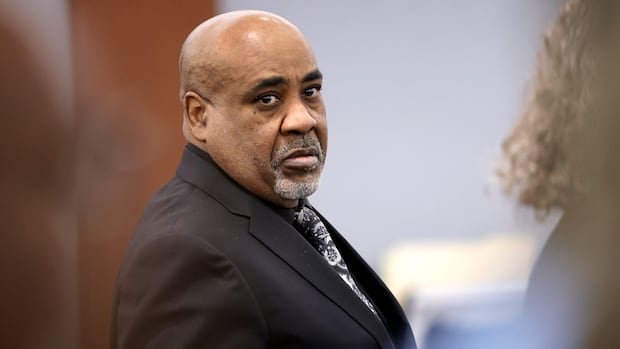

A verdict has been reached in the case involving Duane “Keffe D” Davis, who has been found guilty of orchestrating the 1996 killing of rap legend Tupac Shakur. This marks the first conviction in a long-standing case that has captivated hip-hop enthusiasts for years.
Davis, 63, was convicted on Monday of murder with the use of a deadly weapon and now faces a potential life sentence following a three-hour jury deliberation in Las Vegas. The trial, which lasted several weeks, concluded with the jury’s decision.
Upon hearing the verdict, emotions ran high in the courtroom. Shakur’s sister, Sekyiwa “Set” Shakur, was visibly distraught and reached out for support, while Davis’s son shielded his face with his hand.
During closing arguments, Chief Deputy District Attorney Binu Palal emphasized that Davis had obtained a gun and actively sought out Shakur and Death Row Records co-founder Marion “Suge” Knight following an earlier altercation involving Davis’s nephew. Palal noted the evolving nature of Davis’s recounting of events over time but stressed the consistency in Davis placing himself inside a white Cadillac from which the fatal shots were fired.
Defense attorney Michael Sanft challenged the jury to find concrete evidence, beyond Davis’s own statements, linking him to the scene of the crime in Las Vegas on the night Shakur was shot. Sanft highlighted the absence of surveillance footage, phone records, or other corroborating evidence implicating Davis.
The trial shed light on the events leading up to Shakur’s tragic death in 1996, a case that had remained unsolved for decades until Davis publicly admitted involvement in the shooting. Davis claimed to have been in the Cadillac and provided the weapon to others in the vehicle, portraying the incident as a retaliatory act following an altercation earlier that day.
Under Nevada law, aiding in a murder can result in a conviction, and Davis is the sole surviving member among the four individuals allegedly present in the Cadillac that fateful night. While prosecutors did not allege that Davis pulled the trigger, they argued that his actions in providing the gun and ordering the attack made him criminally responsible.
Palal underscored the premeditated nature of the shooting, pointing to testimonies and Davis’s own accounts detailing the group’s pursuit of Shakur before the fatal encounter. The prosecution emphasized the coordinated planning involved in the incident.
The trial also brought attention to Davis’s 2019 memoir, “Compton Street Legend,” with Palal highlighting discrepancies in the defense’s claims that Davis had altered details for financial gain. Palal argued that Davis was exploiting the murder for profit, contrasting the defense’s narrative.
In a rebuttal, prosecutor Marc DiGiacomo referenced a scrapbook maintained by Davis containing articles about Shakur, suggesting a disturbing fascination with the crime.
The trial’s conclusion has left hip-hop fans and legal experts reflecting on the impact of Shakur’s untimely death and the quest for justice that has spanned decades.