

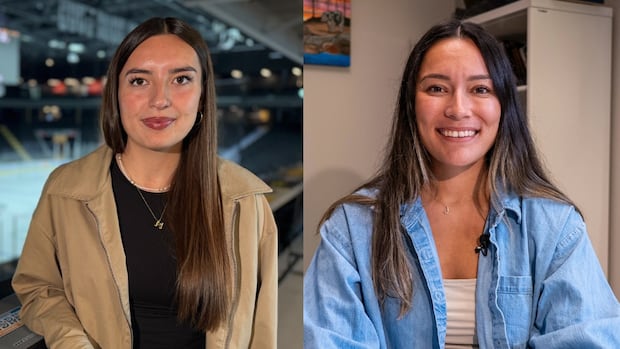

Regardless of whether it was a frigid minus 20 degrees or a bright sunny day in Kitigan Zibi Anishinābeg, Mercedes “Gogo” Côté spent her childhood rushing to school — the beginning of her impressive sports journey.
The 21-year-old grew up in the Indigenous community located in western Quebec, captivated by various sports, ranging from hockey to track and field, that she could engage in.
Currently, she is among the recipients of the Tom Longboat Award, which stands as one of the oldest and most esteemed honors for Indigenous athletes in Canada.
She and Victoria Marchand, another local athlete, were recognized on Saturday evening for their outstanding contributions to sports at the National Indigenous Sports Gala held in Ottawa.
“This means a lot and holds great significance,” Côté expressed. “Having been born and raised in a First Nations community, all the hard work and dedication I have invested throughout my career makes it incredibly special to receive this recognition.”
“For young athletes watching, seeing someone from their own community achieving great things is very important to me,” she added.
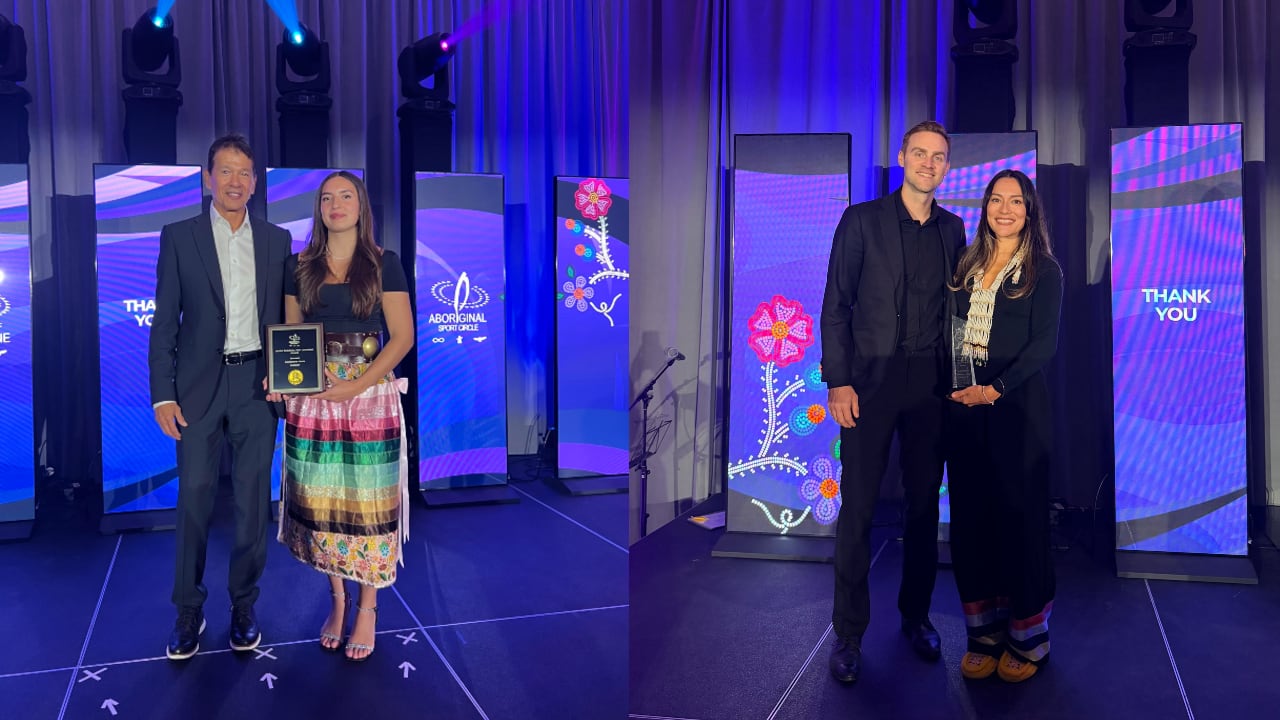
Mercedes ‘Gogo’ Côté (left) and Victoria Marchand (right), both hailing from Kitigan Zibi Anishinābeg, proudly display the awards they earned at the National Indigenous Sports Gala on Saturday night. (Provided by Mercedes Côté and Victoria Marchand)
Before she was even born, Côté was nicknamed “Gogo” because her mother was “always on the go” — a title that aptly describes Côté’s busy schedule filled with extracurricular activities.
She began her minor hockey journey in the nearby town of Maniwaki and later played Midget AAA girls hockey for the Gatineau Intrepide Féminin, where she proudly states she was the first Indigenous captain of the team.
Côté appreciates that she could drive 90 minutes to compete, but she acknowledges that not everyone from Kitigan Zibi has the same opportunity.
“Our community boasts numerous talented athletes,” she noted. “There’s immense potential if we had better facilities and properly trained coaches — that would make a significant impact.”
She went on to be part of the championship team at the 2025 Fred Sasakamoose Chief Thunderstick Championship, a national Indigenous hockey tournament. In track and field, she claimed gold in the 100m, 200m, and 400m events at the 2025 Masters Indigenous Games.
Most recently, she celebrated a victory at the 2026 Ontario Senior AA women’s hockey championship with the Akwesasne Wild.
Beyond her athletic pursuits, Côté is pursuing a degree in fitness and health promotion at Algonquin College in Ottawa, aiming to obtain certification to coach and train athletes, an area she has recently started to explore.
What is her philosophy regarding sports?
“Never give up, just keep moving forward,” she stated. “Go, go. Just like my name.”
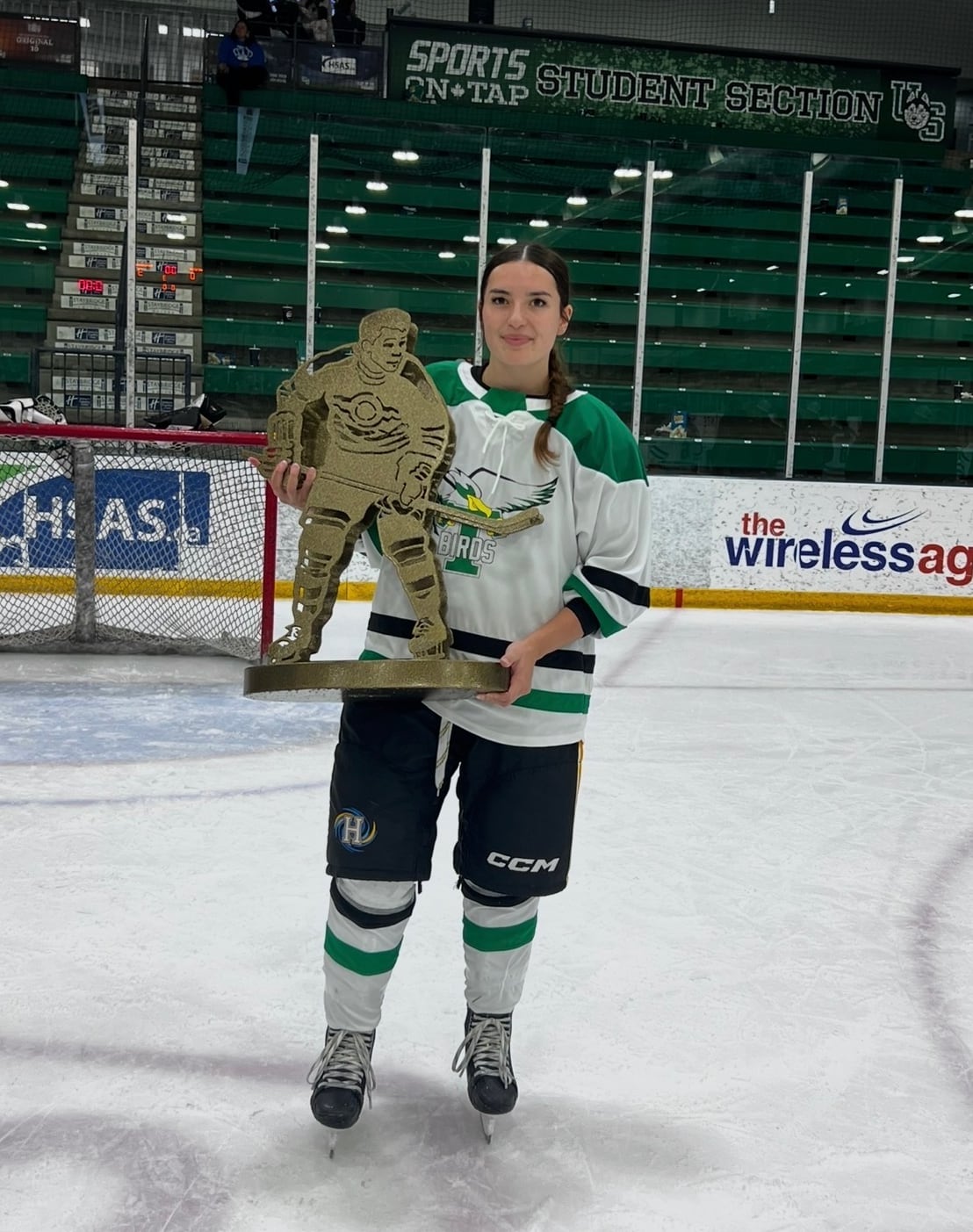
Mercedes ‘Gogo’ Côté expresses gratitude for the chance to play competitive hockey in Gatineau, while also recognizing that not everyone in Kitigan Zibi can undertake the same lengthy trip. (Provided by Mercedes Côté)
A commitment to coaching youth
Marchand, a resident of Kitigan Zibi, Long Point First Nation, and Timiskaming First Nation, is one of the two recipients of the National Indigenous Coaching Award.
Marchand was born in the Gatineau region but grew up alternating between there and Kitigan Zibi, putting on her first pair of soccer cleats at just four years old.
She later played soccer for the women’s team at the University of Ottawa, never having the experience of sharing the field with another Indigenous player, as Marchand remarked.
After graduating, she became a mother, participated in the World Indigenous Games, and played for a semi-professional women’s soccer team in British Columbia.
Soon after, she discovered a passion for coaching.
“If I can inspire even one child from my community to step beyond the conventional sports typically pursued, and to genuinely follow their heart and passion for soccer, that would be incredible,” Marchand expressed.
“Soccer is called the world’s game for a reason. I want the children to grasp that from me.”
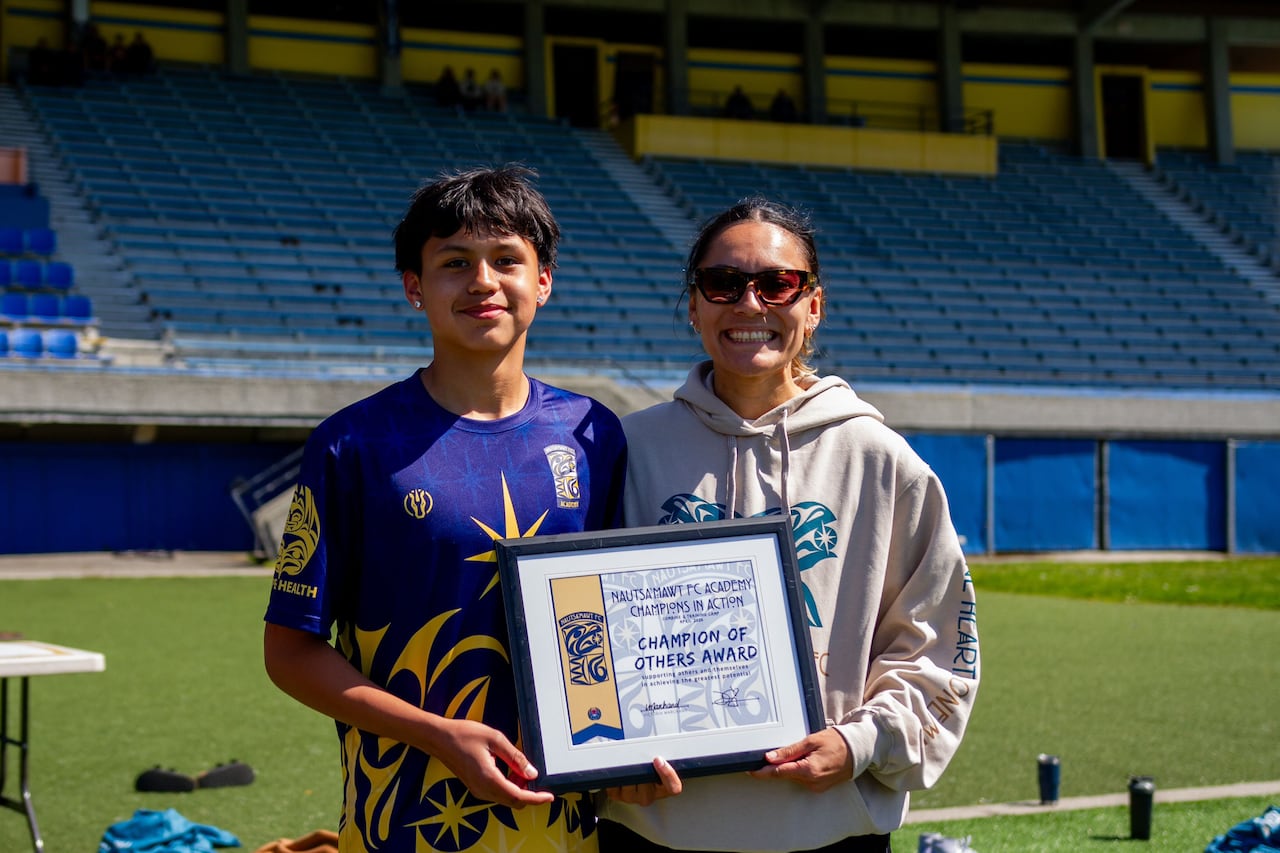
Victoria Marchand, right, stands alongside Lason Taylor, one of the athletes she mentors at the Nautsa’mawt FC Academy based in B.C. (Provided by Victoria Marchand)
Currently, Marchand serves as the director of Indigenous Player Development and Pathways at Hope and Health and is the head coach of the Nautsa’mawt FC Academy located in British Columbia.
She operates virtually from her traditional territory of the Algonquin Anishinabeg.
In that capacity, she has established a mentorship initiative connecting Indigenous youth with mentors who are current players in universities and colleges. So far, 78 Indigenous children aged 12 to 18 have signed up for the upcoming season.
“They deserve visibility at the highest levels. Currently, there are minimal pathways available, but we are making progress,” Marchand stated.
“If I can leave behind a legacy in my life, I hope it is this. If not for my son, then for all the little ones in my community.”