

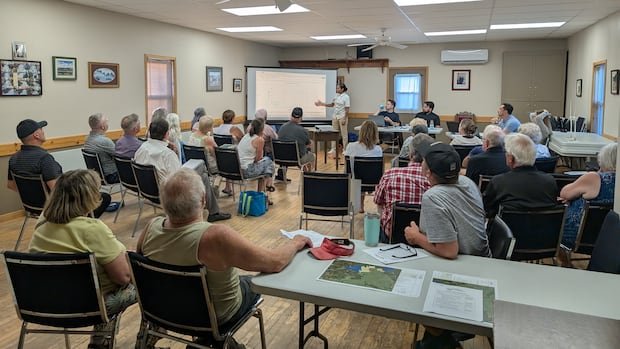

Residents in Waterford are expressing concerns over a possible conflict of interest involving a consulting firm engaged in a wind farm project proposed for their community southeast of Sussex. The residents fear that Dillon Consulting, working for both Natural Forces and the Kings Regional Service Commission, may compromise the project’s approval process.
Mary Ann Coleman, a former committee chair for the Waterford Local Service District, emphasized the community’s dismay at dealing with a company facing a significant conflict of interest. Natural Forces plans to commence construction on the initial 15 wind turbines as early as fall, with Dillon Consulting having prepared the project’s environmental impact assessment.
The Paqt’smawei Sipu Wind Project, in which Natural Forces, Indian Island First Nation, and Mi’gmaq United Investment Network are partners, has the green light to erect up to 42 wind turbines standing around 200 meters tall. Tess Donohue, the project manager at Natural Forces, mentioned that Dillon Consulting has been involved in the project since 2024 and expressed confidence in the firm’s capabilities.
Despite the concerns raised by residents, Donohue defended Dillon Consulting’s involvement, stating that she perceives no conflict of interest from their perspective. CBC News’ repeated interview requests to the service commission went unanswered, as did those to Dillon Consulting. The Kings Rural District, serving as the elected representation for the Waterford area, also remained unavailable for comment.
The wind farm project awaits a few permits and must meet specific conditions before proceeding in the fall. Among the final obstacles is obtaining a development permit from the regional service commission. Natural Forces seeks to amend Waterford’s rural plan through the Kings Regional Service Commission, enabling the construction of large-scale wind turbines within rural use zones.
The proposed amendment includes regulations on turbine construction, such as minimum distances from dwelling units and public roads, in adherence to government guidelines. Coleman, involved in the rural plan’s development, highlighted the community’s efforts to preserve Waterford’s character and rural lifestyle through past public consultations.
Concerns have arisen over the new definition of dwelling unit proposed in the amendment, which may exclude seasonal property owners from the classification. Donohue explained the rationale behind excluding seasonal properties from setback requirements in wind farm projects due to their intermittent use. The commission’s planning committee has endorsed the amendment, forwarding it to Local Government Minister Aaron Kennedy for final approval, while seeking public input on the proposed changes.