

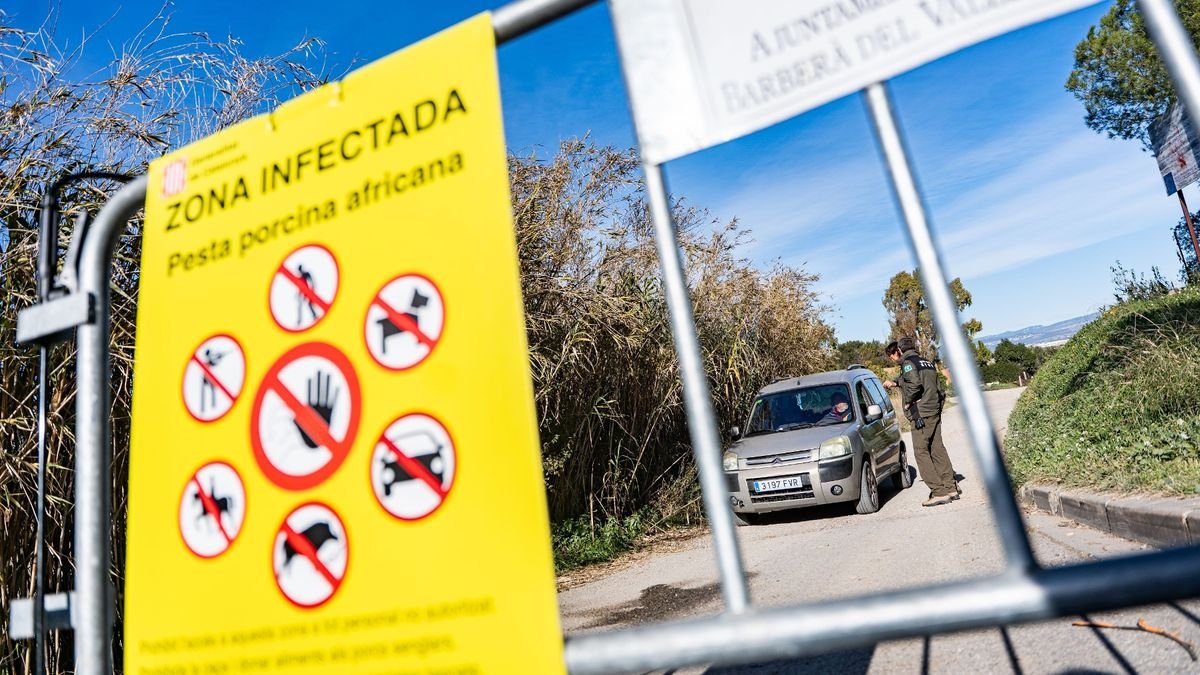

An outbreak of Swine Flu has triggered a state of emergency in Spain, with concerns raised that a high-security laboratory undergoing maintenance could be the source. Spanish authorities have confirmed 13 cases of the disease in wild boars, causing fatal internal bleeding in animals, during the recent flu season. This has led to fears of potential spread to other animals, prompting experts to investigate 39 pig farms within a 20km radius of the initial outbreak zone in Catalonia to contain the infections.
Although no other animals have tested positive yet, suspicions have turned towards the possibility of the virus escaping from a nearby lab where an infected boar perished earlier this year. Officials are looking into the potential leakage from one of the five facilities within 20km of the outbreak area known to handle the virus. Among these facilities is the Centre for Research in Animal Health (CReSA) in Bellaterra, which was undergoing expansion work when the outbreak occurred.
Salvador Illa, the regional president of Catalonia, has ordered an audit of the unidentified facilities by the autonomous community’s agrifood research institute. The government is exploring all avenues regarding the origin of the African swine fever outbreak, emphasizing the need for clarity on the situation.
Spain’s agriculture ministry reported that the virus strain found in the boar resembles one detected in Georgia almost two decades ago, distinct from strains in other EU countries. They stated that the discovery does not rule out the possibility of the virus originating from a biological containment facility. The strain “Georgia 2007” is a reference virus commonly used in experimental infections in containment facilities for research and vaccine development purposes.
While the number of cases may seem limited, Spanish authorities are acting swiftly to safeguard the country’s significant pork exports, generating €8.8 billion (£7.7 billion) annually. Initial assumptions that the disease spread through contaminated food brought into the country have been challenged. As agricultural authorities combat the outbreak, health officials are aggressively addressing flu cases, particularly the more severe H3N2 influenza strain, which has already surpassed last year’s seasonal peak.
The Carlos III Health Institute estimates a current flu rate of approximately 112.2 cases per 100,000 individuals, nearly ten times higher than the same period in 2025.