

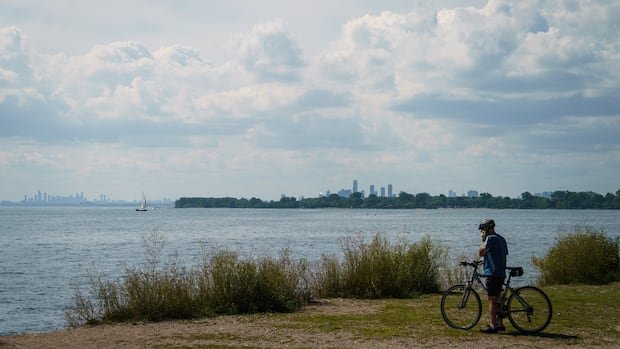

The Great Lakes, known for their vast freshwater reserves and role in providing water to around 40 million individuals, have traditionally represented the close ties between Canada and the U.S. President Donald Trump recently made a significant move in his trade dispute with Canada by issuing an executive order to rename Lake Ontario as Lake America.
While the authority for such a renaming remains uncertain due to the lake’s historical significance predating European colonization and widespread international recognition over centuries, this action reflects a broader approach by the Trump administration hindering collaborative efforts between the U.S. and Canada on scientific research and environmental restoration in the Great Lakes region.
Aaron Fisk, a professor at the University of Windsor’s Great Lakes Institute for Environmental Research, expressed concerns about the current U.S. administration’s stance on environmental and scientific matters, emphasizing the importance of evidence-based decision-making for environmental issues and the adverse impact of the administration’s cuts to scientific agencies like the National Oceanic and Atmospheric Administration and the Environmental Protection Agency on Great Lakes monitoring and research efforts.
Joel Brammeier, the president and CEO of the Alliance for the Great Lakes, emphasized the necessity of U.S.-Canada collaboration in managing and preserving the shared waters of the Great Lakes, highlighting the importance of transcending political boundaries for effective water management and restoration efforts in the region.
Despite the Trump administration’s significant reductions in federal funding for scientific agencies, bipartisan support has emerged to safeguard critical programs like the Great Lakes Restoration Initiative, which aims to restore ecosystems and address industrial pollution in the region. The reauthorization of this program through 2031 with substantial federal funding indicates bipartisan recognition of the initiative’s success in uniting political parties in supporting Great Lakes conservation efforts.
Furthermore, the Great Lakes face new challenges from climate change, including extreme weather patterns and shifting precipitation, necessitating comprehensive cross-border studies. Experts like Mike Shriberg from the University of Michigan’s Water Center underscore the emerging challenges related to water availability and access, especially in light of climate-induced changes in water flows and increasing water demand from various sectors.
Looking ahead, experts like Andrew Gronewold stress the need to address future water usage challenges in the Great Lakes region, particularly as external pressures for water resources grow. Efforts to safeguard agreements governing water usage, such as the Great Lakes compact and agreement, are crucial to ensuring sustainable water management in the face of evolving demands in the coming decades.